Can One Cannabis Vape Manufacturer Support Multiple Oil Types and Product Formats?
Cannabis brands rarely stay with one oil formulation or one device format forever. A product portfolio may include distillates, live resin, and rosin while using cartridges, pods, and all-in-one vaporizers for different markets. The challenge is finding a manufacturing partner that can adapt the heating system and device architecture without creating a fragmented supply chain. We believe the answer depends on technology, testing capabilities, product range, and development support.
Can One Hardware Platform Work With Different Oils?
Oil compatibility should be the first question. Different formulations can have different viscosity and flow characteristics, which means the heating element and oil-delivery system may need different configurations.
At Maxcore, we do not treat every formulation as identical. Our POSTLESS® technology supports oil-specific ceramic heating configurations for Delta-9 distillate, live resin, rosin, and other suitable cannabis oil applications. Our technology platform is designed to connect oil characteristics with ceramic heating and atomization performance.
For a cannabis vape hardware manufacturer, this approach is important because “multi-oil compatibility” should mean more than putting different oils into exactly the same hardware.
What Does Oil-Specific Ceramic Technology Change?
Ceramic heating technology can be configured around the requirements of different formulations. A manufacturer should therefore be able to explain how it evaluates oil behavior and determines the appropriate heating structure.
Our POSTLESS® platform uses a center-post-free, cotton-free ceramic heating structure. According to our published technology specifications, the ceramic core is sintered at 1,200°C and incorporates 100 million micropores across the oil supply area. We state that this structure provides 2.4 times the oil-supply area and a 35% increase in oil-transfer speed.
These specifications form part of a broader development system rather than representing a universal setting for every oil.
Can the Same Manufacturer Support Different Product Formats?
Oil flexibility is only half the equation. A brand may also need different formats as its portfolio develops. One product might require a compact all-in-one device, while another could use a pod or traditional cartridge.
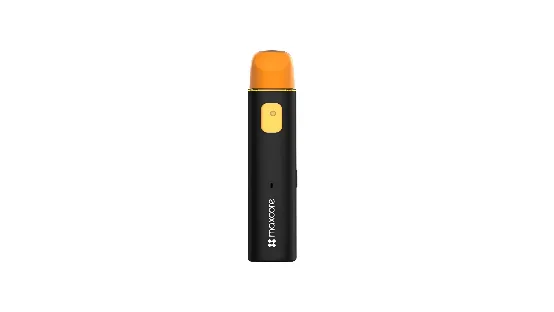
Our current product portfolio includes POSTLESS® all-in-one vaporizers, pod systems, and cartridges. It ranges from compact devices to larger-volume formats, with published tank capacities extending from 0.5 ml cartridges or devices to 5.0 ml all-in-one products.
This range allows brands to consider different formats while working within a broader ceramic and POSTLESS® technology ecosystem.
How Does Meto Fit a Multi-Product Strategy?
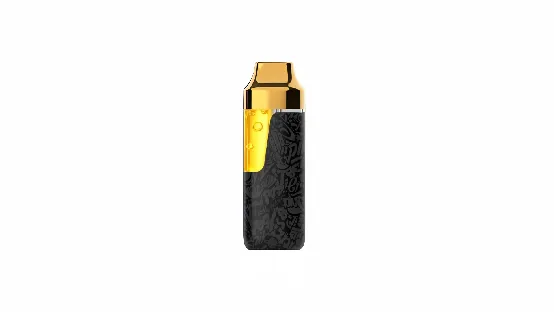
Meto illustrates how a manufacturer can adapt the underlying technology to a compact product format. It is a Postless Dual-Airway All-In-One Vaporizer available with 1.0 ml or 2.0 ml tank volumes and a patented P30 ceramic coil.
Its published specifications include a 265mAh battery, inhale activation, Type-C charging, and output settings of 5.5W/6W/6.5W for distillates and 4W/4.5W/5W for live resin. The device uses food-grade PCTG and stainless steel for the tank and measures 12.5 × 23 × 100 mm.
For B2B brands, those oil-specific power configurations demonstrate why device development can be more nuanced than simply changing the filling material.
Does the Manufacturer Have Enough Testing Experience?
A supplier supporting multiple oils should also have a testing methodology behind its compatibility claims. Brands should ask how formulations are evaluated, whether different ceramic configurations are tested, and whether the same platform has been validated across multiple device formats.
Our published company information states that we have tested more than 100 oil formulations. We also describe our R&D approach as starting with oil composition, viscosity, flow behavior, and atomization characteristics before selecting the ceramic substrate and heating-track design.
That oil-driven process can help reduce the assumption that one hardware configuration automatically suits every formulation.
Can Production Scale Across Different Formats?
Supporting several products also requires manufacturing infrastructure. A technically capable prototype supplier may still struggle when a brand needs consistent production across multiple models and markets.
At Maxcore, we connect product development with commercial manufacturing. Our company information reports more than 80 million cumulative units delivered, while our OEM/ODM service covers concept, prototyping, validation, and mass production. We also maintain manufacturing and R&D capabilities across multiple locations.
For a bulk vape hardware manufacture program, this production foundation matters because different product formats still need consistent quality controls and supply-chain coordination.
Can Customization Stay Consistent Across Products?
Multi-format programs often require more than technical compatibility. Brands may want different shapes, finishes, oil windows, mouthpieces, or other visual elements while maintaining recognizable design language across their portfolio.
We support customization across our hardware range, including color, finish, oil window, and mouthpiece options on products such as Meto. This enables brands to adapt the external presentation without abandoning the underlying platform.
For a cannabis vape hardware manufacturer, the ability to connect customization with established engineering can be valuable when a brand expands from one product into several formats.
Building One Hardware Partnership Across a Growing Portfolio
One manufacturer can support multiple oil types and formats when its technology, testing, product architecture, and production systems are designed for that purpose. The key is to look beyond a catalog claim and examine how the supplier actually matches oil characteristics with ceramic heating and device configuration.
At Maxcore, we combine POSTLESS® technology, oil-specific ceramic configurations, multiple hardware formats, and OEM/ODM support. For brands planning bulk vape hardware manufacture, this approach can provide a common development foundation across different products while allowing each device to be configured for its intended oil and application.