How Do You Choose an Empty Vape Cartridge for a Cannabis Oil Brand?
Choosing an empty vape cartridge is a technical decision that can influence oil compatibility, atomization, product appearance, and manufacturing consistency. For cannabis oil brands, the cartridge needs to work as an integrated system with the formulation, heating element, battery, airflow, and filling process. ASTM identifies reservoir characteristics, heat-source characteristics, and power-source integration as important elements of electronic cannabinoid delivery systems. For buyers, this makes vaping solutions selection a product-development decision rather than a simple component purchase.
Start With the Oil Formulation
The oil should be one of the first specifications discussed with a cartridge supplier. Different cannabis formulations can have different flow characteristics, and those differences can affect how efficiently oil reaches the heating element.
For thicker formulations, the oil path may need to provide sufficient flow toward the atomization area. For more fluid formulations, excessive oil delivery can create different performance challenges. Buyers should therefore provide representative oil samples or detailed formulation information whenever possible.
ASTM's guide for cannabis extract vaporizers recognizes that extract-vaporizer characteristics include individual components, design elements, and basic functions. This supports evaluating the cartridge as part of the broader device rather than treating the reservoir as an independent container.
Evaluate the Heating System
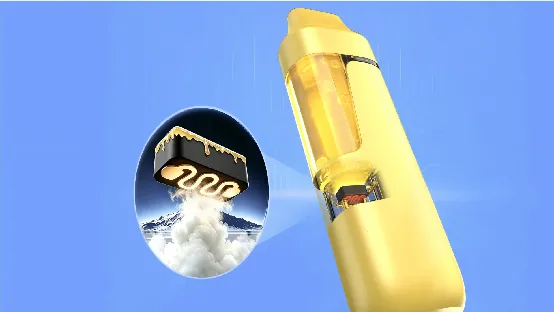
The heating element is another critical selection factor. Ceramic heating systems can be designed with different structures and electrical characteristics, so simply specifying “ceramic” is not enough to define performance.
Buyers should examine resistance, heating behavior, oil-contact area, and the way oil reaches the heating surface. These characteristics should be assessed against the actual formulation because the same heating architecture may behave differently with oils having different flow properties.
For vaping solutions intended for commercial production, prototype testing should examine vapor consistency, oil feeding, flavor delivery, leakage, and clogging. Testing the complete cartridge with the intended battery and formulation gives engineering teams more useful information than evaluating individual components separately.
Match Capacity With the Product Format
Cartridge capacity should reflect the brand's intended product format, filling requirements, dimensions, and target market. A larger reservoir is not automatically more appropriate because increased volume can affect the cartridge's physical proportions and internal component arrangement.
Buyers should review capacity together with tank geometry, headspace, oil path, mouthpiece structure, and heating-element placement. The objective is to create enough usable reservoir volume while maintaining an appropriate relationship between oil storage and atomization.
ASTM's classification work for electronic cannabinoid delivery systems specifically considers reservoir characteristics as part of device classification. This reinforces the importance of treating reservoir design as one element within the complete hardware architecture.
Check Materials and Oil-Contact Components
Material selection deserves particular attention because some cartridge components can come into direct or indirect contact with cannabis extract. Buyers should identify the materials used in the reservoir, heating system, seals, mouthpiece, and other areas that may interact with oil or generated aerosol.
ASTM is developing guidance concerning restricted substances in materials used to manufacture cannabis and hemp extract vaporizers. Its stated scope specifically considers materials such as metals, ceramics, glass, plastics, and polymers in relation to direct and indirect contact with liquid extract.
For B2B procurement, this means material documentation and compatibility testing should be included in supplier evaluation. Material selection should address functional requirements as well as the regulatory and market requirements applicable to the finished product.
Review the Battery Connection
A cartridge cannot be evaluated separately from its power source. Buyers should confirm the connection type, electrical contacts, resistance, operating voltage, and mechanical dimensions required for the intended battery.
Electrical compatibility is particularly important because the heating element converts electrical energy into heat. An unsuitable combination can affect heating behavior and device performance. ASTM is also developing work addressing compatible voltage ranges, output-power limitations, and ramp-up durations for interchangeable vaporizer devices and accessories.
FDA guidance for electronic nicotine-delivery products likewise identifies battery and atomizer characteristics as relevant engineering parameters and recommends documenting appropriate electrical safety features where applicable.
Develop the Appearance With the Hardware
Technical performance is only part of cartridge selection for a commercial cannabis brand. Appearance can help establish a recognizable product identity, which is where vape CMF design becomes relevant.
Color, material, and finish can be considered alongside cartridge geometry, mouthpiece design, transparency, surface treatment, and decorative components. These choices can differentiate product lines while remaining connected to the underlying hardware architecture.
However, vape CMF design should not be treated as a cosmetic step added after engineering. Material finishes, coatings, dimensional changes, and decorative elements can affect manufacturing processes, tolerances, assembly, and quality control. Integrating CMF decisions into the development process can reduce the need for late-stage redesign.
Validate Before Production Scaling
A promising cartridge specification still needs practical verification. Testing should use the intended oil formulation and, where relevant, the intended battery and filling process.
Teams should evaluate oil filling, feeding, vapor consistency, leakage, clogging, activation, structural integrity, and performance over repeated use. These tests help identify whether the selected cartridge architecture actually supports the product requirements.
FDA recognizes cartridges, atomizers, tanks, mouthpieces, batteries, and other components as parts of electronic vaping products in its regulatory framework for ENDS. While cannabis products can fall under different regulatory regimes depending on jurisdiction and product classification, the broader principle remains useful: component performance should be considered within the finished product.
Connect Design With Manufacturing
At Maxcore, we guide cannabis vape brands through a structured custom vape product development process, from product definition and vape industrial design to verification, trial production, and vape manufacturing. Our OEM/ODM services keep design, engineering, testing, production readiness, and delivery aligned within one project workflow.
This integrated process allows cartridge requirements to be considered together. Oil compatibility, heating architecture, capacity, battery connection, materials, and vape CMF design can be evaluated before the project moves into larger-scale production.
For brands seeking vaping solutions, this approach can also make communication between product, engineering, procurement, and manufacturing teams more efficient. Each group can work from the same defined requirements instead of making isolated component decisions.
Make Cartridge Selection Part of Product Strategy
The right empty cartridge should satisfy technical, manufacturing, and branding requirements at the same time. Oil characteristics establish the compatibility baseline, while heating technology, capacity, materials, electrical connection, dimensions, and appearance determine how the cartridge functions as a finished product.
At Maxcore, we connect product definition, industrial design, engineering verification, trial production, and manufacturing within our OEM/ODM workflow. This helps brands move from an initial cartridge concept toward a specification that can be tested and refined before production scaling.
Conclusion: Build the Cartridge Around the Complete Product
Choosing an empty vape cartridge requires more than comparing reservoir volume or exterior appearance. Buyers should evaluate oil compatibility, heating performance, capacity, materials, battery connection, manufacturing requirements, and vape CMF design as interconnected requirements.
As a vaping solutions partner, we support cannabis vape brands through structured OEM/ODM development, helping align product definition, engineering, testing, production readiness, and delivery. A complete system-level approach gives brands a clearer path from cartridge concept to a production-ready hardware solution.