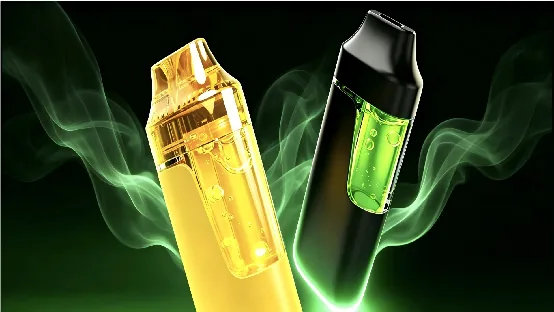
How Do You Evaluate an Empty All-in-One Vape for Live Resin or Rosin?
Live resin and rosin place different demands on vape hardware than many conventional oils. Their viscosity, terpene profiles, and formulation characteristics can make an empty all-in-one vape harder to evaluate by appearance alone. For cannabis brands sourcing hardware, the right assessment should cover oil compatibility, heating behavior, airflow, materials, leakage control, and manufacturing consistency. That is where practical vaping solutions and disciplined vape industrial design become important.

Start With Oil Compatibility, Not Appearance
A visually attractive device is not necessarily suitable for thick or terpene-rich extracts. Hardware should first be assessed against the intended oil formulation. Ceramic heating systems are widely used because their porous structures can support oil delivery to the heating surface. Commercial cartridge manufacturers now specifically develop ceramic systems for challenging oils, including live rosin and other high-viscosity extracts.
For an OEM project, we recommend testing the actual oil rather than approving hardware from a specification sheet alone. Different formulations can behave differently, so sampling should examine draw consistency, oil movement, leakage, clogging, and vapor production throughout the usable fill.
Evaluate the Heating System Carefully
The heating element is central to hardware performance. A suitable system needs to deliver repeatable heating while maintaining controlled oil contact with the atomization surface. Excessive or uneven heating can affect flavor and may create burnt-taste complaints, while insufficient heating can contribute to poor vaporization.
Temperature behavior also deserves attention during testing. Professional vaporizer manufacturers note that actual inhalation temperature can vary according to selected temperature, material load, and draw duration. For an all-in-one device, engineering teams therefore need to evaluate the complete heating system rather than treating coil resistance as the only performance indicator.
Examine Airflow and Leakage Protection
Airflow is another important part of vape industrial design. A device can have an appropriate heating element but still deliver an inconsistent experience if the airflow path is poorly designed. Air inlet dimensions, internal channels, mouthpiece geometry, and the relationship between airflow and heating should be evaluated together.
Leakage is equally important for commercial brands. Extracts can migrate through poorly sealed interfaces during storage, transportation, or changes in temperature. A good evaluation should therefore include upright and inverted storage, temperature variation, transportation simulation, and repeated activation tests. Some current AIO designs also use isolated airways and dual air vents to separate vapor paths from electronic components.
Check Materials and the Oil Contact Path
Material selection should be evaluated according to every component that may contact the oil or vapor path. This includes the reservoir, heating element, center post, seals, mouthpiece, and internal airway. Glass, ceramics, metals, and thermoplastics each have different mechanical and chemical characteristics.
For brands developing regulated cannabis products, documentation is just as important as the physical materials. Testing should establish what materials are used and whether the finished hardware meets the applicable market requirements. This is especially relevant given the public-health concerns associated with contaminated or adulterated THC vaping products. The CDC and FDA have specifically warned against adding vitamin E acetate or other substances not intended by the manufacturer.
Assess the Complete AIO, Not Just the Cartridge
An empty all-in-one device combines the oil reservoir, atomizer, battery, electronics, airflow system, and exterior housing. That means a cartridge that performs well independently may not automatically perform equally well after integration.
Battery capacity, activation method, charging architecture, indicator behavior, and physical dimensions all influence the final product. Brands should also consider how the device will be filled, capped, packaged, transported, and stored at scale. These details turn vaping solutions from individual components into a manufacturable commercial product.
We also recommend reviewing assembly tolerances early. Small variations between the reservoir, heating assembly, seals, and mouthpiece can create larger differences in production performance. Pilot runs are useful for identifying these problems before full-scale manufacturing begins.
Test With Real Oil and Real Production Conditions
Laboratory specifications provide a starting point, but real-oil testing should determine whether the hardware is appropriate. Testing can compare multiple batches and monitor performance from the first activation through the later stages of the fill. Useful observations include consistency, leakage, clogging, activation reliability, battery behavior, and visible changes in the oil.
This is where our OEM/ODM workflow focuses on practical validation. At Maxcore, we combine market research, custom vape hardware development, real-oil testing, manufacturing, and post-production support within one coordinated process. Our approach allows hardware decisions to be evaluated against the intended application rather than selected solely from a generic catalog.
Build the Design Around the Brand and Application
For cannabis brands, hardware selection is also a branding decision. Form factor, mouthpiece design, surface treatment, activation method, and packaging compatibility can influence how a finished product fits a particular product line. However, visual customization should not compromise the underlying oil path, airflow, sealing system, or manufacturing repeatability.
Our custom development process considers these requirements together. Through vape industrial design, we can work from the intended market positioning and oil characteristics toward a hardware concept that can be evaluated through prototypes and production testing. This helps brands connect appearance with functional requirements instead of treating industrial design as an isolated cosmetic exercise.
Make Performance and Compliance Part of the Same Review
A successful hardware evaluation should end with documented acceptance criteria. Brands can define measurable requirements for leakage, activation, airflow, heating consistency, assembly quality, dimensional tolerances, and applicable material or compliance testing.
We believe this structured approach makes supplier discussions more productive. Instead of asking whether an empty AIO is simply “compatible,” buyers can assess exactly how the hardware behaves with the intended formulation and production process. That distinction is particularly valuable for specialized extracts such as live resin and rosin.
Turning Extract Requirements Into Practical Hardware
Choosing an empty all-in-one vape for live resin or rosin requires more than comparing capacity, appearance, or battery specifications. Oil compatibility, heating, airflow, sealing, materials, integration, testing, and manufacturing controls all need to work together. For brands seeking dependable vaping solutions, we at Maxcore support the process from research and custom development through real-oil validation and manufacturing. Contact us to discuss a custom hardware project built around your application.