How Does Tank Design Affect Filling and Oil Visibility in an Empty All-in-One Vape?
Tank design is more than a matter of appearance in an empty all-in-one vape. For cannabis vape brands, the reservoir affects how efficiently oil can be introduced, how easily the remaining oil can be viewed, and how the finished device performs during storage and use. A well-designed tank therefore needs to balance capacity, visibility, filling access, internal geometry, and sealing. For B2B buyers evaluating vaping solutions, these details can directly influence manufacturing efficiency and product consistency.

Why Tank Architecture Matters for Filling
A tank must accommodate both the oil and the filling process. Cannabis oils can be highly viscous, and their flow behavior can change with formulation and temperature. This means a reservoir that looks adequate on paper may still create production challenges if the filling opening, internal geometry, or venting arrangement does not suit the oil.
Research and industry engineering experience indicate that trapped air is another important consideration. Tank-type cartridges can retain air during filling, and changes in pressure can contribute to leakage through the atomization pathway. Filling methods therefore need to control how oil enters the reservoir while displaced air can escape.
For brands developing an all-in-one platform, these considerations should be addressed during hardware design rather than after the production process has already been established.
Tank Shape Influences Oil Visibility
Oil visibility is closely connected to the geometry and material arrangement of the reservoir. A transparent or translucent tank can allow users and production teams to see the approximate amount of oil remaining, while opaque sections can conceal internal components and create a cleaner exterior appearance.
Patent literature describes cartridge designs using a transparent or translucent central region specifically to reveal the amount of vaporizable material while keeping internal components less visually prominent. This illustrates how visibility can be treated as an intentional part of the tank architecture rather than simply a consequence of using clear material.
The visible area also needs to remain useful after the device is assembled. Tank walls, mouthpiece structures, heating components, and decorative elements can all obstruct the user's view. For premium products, we consider these relationships when developing vaping solutions that need both visual refinement and practical oil monitoring.
Filling Access and Internal Air Management
The filling interface is another major design variable. A narrow or poorly positioned filling port can make nozzle alignment more difficult, particularly in automated or semi-automated production. A wider, accessible opening can simplify filling and help manufacturers establish more repeatable operating parameters.
At Maxcore, we support custom hardware development with filling requirements considered alongside the product architecture. Our compatible hardware includes accessible top-filling configurations designed to facilitate nozzle access and production handling. We also provide product-specific filling instructions and optional technical guidance to help brands align filling parameters with their equipment and oil characteristics.
Air management is equally important. During filling, oil displaces the air already occupying the reservoir. If the tank geometry does not provide an appropriate path for that displaced air, bubbles or inconsistent filling can become more difficult to control. Patent research on fillable vaporizer cartridges has specifically addressed methods for reducing trapped air during filling.
Oil Visibility Is More Than a Consumer Feature
For a cannabis brand, a visible oil reservoir can also support production and quality-control processes. Operators may be able to identify obvious filling inconsistencies, unusual air pockets, or changes in the apparent fill level without opening the finished device.
However, visual inspection should not be treated as an exact measurement of oil quantity. Oil can expand or contract with temperature, while bubbles and headspace can affect how the fill level appears. Consequently, manufacturers still need validated filling parameters and appropriate process controls rather than relying solely on what can be seen through the tank.
This is particularly relevant when different formulations are introduced. Viscosity affects how oil moves through filling equipment and into the reservoir, making formulation-specific process development important for scalable manufacturing.
Designing the Tank Around the Complete Device
An all-in-one vape cannot be optimized by looking at the tank in isolation. The reservoir interacts with the atomizer, airflow pathway, battery, mouthpiece, seals, and exterior housing. Changing one dimension can affect available oil volume, component placement, visual transparency, or assembly requirements.
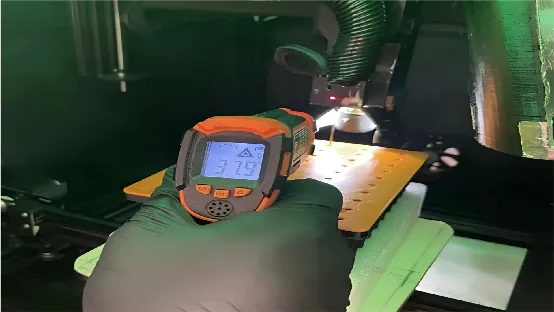
Heating performance is another reason to consider the complete architecture. Published research on cannabis vaporization systems found that voltage-controlled systems could produce substantially different coil temperatures under different operating conditions. While the study focused on heating rather than tank construction, it demonstrates why hardware components need to be evaluated as an integrated system rather than selected independently.
For B2B development teams, this integrated approach can reduce the risk of discovering compatibility or manufacturing issues after tooling has begun.
When One-Stop Development Makes Sense
Brands developing a new all-in-one vape may need more than a finished hardware component. Product architecture, industrial design, mechanical engineering, prototyping, oil compatibility, and filling requirements can all affect the final product.
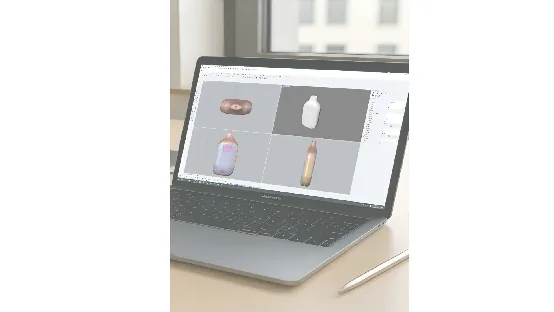
At Maxcore, we turn a product brief into a manufacturable custom vape hardware concept. We align product architecture, industrial design, mechanical engineering, and prototype requirements before approving the proof of concept. This approach allows design decisions around the tank, filling interface, and visible oil area to be considered together.
A one stop vape manufacturing approach can also simplify communication between development and production teams. Instead of treating hardware design, prototyping, and manufacturing as disconnected stages, brands can establish requirements earlier and validate the resulting architecture before moving toward larger-scale production.
Building a Tank for Production and Product Experience
The best tank design is ultimately the one that supports the requirements of the complete product. Filling access should match the production method, internal geometry should accommodate the oil and atomization system, and the visible area should provide useful oil visibility without compromising the desired exterior design.
At Maxcore, we approach vaping solutions through this combination of engineering, prototyping, and manufacturing considerations. Our one stop vape manufacturing capabilities help cannabis vape brands translate a product concept into hardware designed around practical production requirements.
For brands evaluating an empty all-in-one vape, tank design deserves attention from the earliest development stage. By connecting oil behavior, filling access, visibility, and overall device architecture, we help create vaping solutions that are better aligned with both manufacturing workflows and the intended product experience.