What Are the Hardware Trade-Offs of 3ml to 5ml Empty Cannabis Vapes?
Cannabis vape brands choosing empty hardware often compare 3ml and 5ml formats as a question of capacity. Yet tank volume affects more than how much oil a device can hold. It can influence device dimensions, oil-contact area, heating consistency, leakage management, filling processes, packaging, and the intended product experience. For B2B buyers, the better format is therefore the one that aligns capacity with formulation, hardware architecture, and commercial requirements.
Why Capacity Changes the Hardware Equation
A larger reservoir provides more volume, but it also changes the relationship between oil and the atomization system. A 5ml design may require a larger tank or a different internal geometry, while a 3ml format can offer more compact proportions. These differences affect airflow, oil delivery, mouthpiece structure, and battery integration.
Cannabis extracts can also vary considerably in viscosity. Research has shown that high-viscosity liquids can be difficult to aerosolize efficiently when the heating element does not receive the right amount of liquid. Ceramic-based heating systems are commonly used for cannabinoid products partly because they can provide greater surface area for aerosol generation from more viscous liquids.
3ml: Compactness Versus Available Capacity
A 3ml empty vape can be attractive when a brand prioritizes a relatively compact product profile. A smaller reservoir may simplify efforts to keep the overall device manageable for packaging, transportation, and consumer handling. It can also align with product concepts where the intended fill volume does not require a larger tank.
The trade-off is reduced capacity. If the product requires more oil, moving to 3ml may require more frequent replacement or a different configuration. Brands should assess actual fill requirements rather than simply choosing the smallest format.
For custom vape design, the 3ml route can provide a useful starting point when dimensions, ergonomics, and portability are major considerations. However, the smaller reservoir still needs to maintain reliable oil feeding throughout its intended service life.
5ml: More Capacity, More Design Responsibility
A 5ml empty vape gives brands additional reservoir capacity, which may support products designed around larger oil volumes. The benefit is straightforward, but greater capacity does not automatically mean better performance. The tank, heating system, airflow path, and battery must remain balanced as the physical volume increases.
A larger reservoir can also create additional engineering considerations around structural integrity, sealing, filling, and oil movement. Depending on the internal architecture, designers may need to evaluate how oil reaches the heating area as the fill level changes. This is especially relevant for viscous formulations, where fluid movement can affect coil saturation.
For vaping solutions intended for larger-volume products, capacity should therefore be evaluated alongside atomization performance. A 5ml tank is useful only when the complete system can consistently convert the formulation into aerosol under the intended operating conditions.
Heating Performance Matters More Than Tank Size
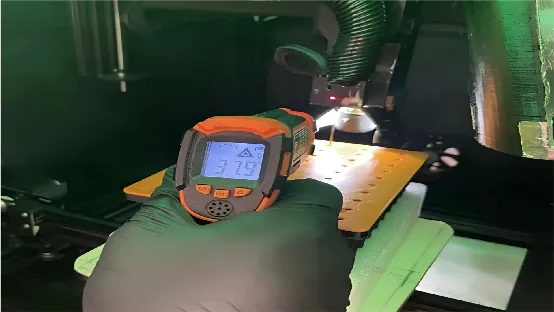
The atomizer remains central to either format. Published research has found that voltage-controlled cannabis vaporization systems can produce substantially different heating temperatures, and voltage alone may be a poor indicator of actual coil temperature. Another study of ceramic-coil cartridges recorded maximum temperatures above 430°C under selected elevated-power conditions.
These findings do not mean every 3ml or 5ml device operates at those temperatures. They demonstrate why heating behavior should be measured during development rather than inferred from battery voltage or nominal specifications. Our vaping solutions therefore need to consider power delivery, ceramic heating characteristics, oil viscosity, airflow, and puff conditions together.
From a B2B development perspective, testing should examine more than whether a prototype produces visible aerosol. Brands can evaluate consistency, leakage, oil utilization, heating response, electrical performance, and reliability across defined test conditions. This helps connect the chosen reservoir capacity with the actual formulation and device architecture.
How We Approach Custom Vape Design
At Maxcore, we develop custom cannabis vape hardware around the relationship between the oil and the device. Our OEM/ODM workflow combines market and user research, oil-focused R&D, custom vape design and engineering, real-oil testing, manufacturing, and post-production support.
Our R&D and testing laboratory supports prototype evaluation through capabilities covering chemistry, aerosol physics, atomization, simulation, reliability, electrical performance, sensory analysis, and project-specific safety testing. This allows us to examine the complete system instead of treating reservoir capacity as an isolated specification.
When a brand is deciding between 3ml and 5ml, we can assess the intended oil, target dimensions, atomization requirements, and product positioning together. Our vaping solutions are developed around these connected requirements, helping brands determine whether additional capacity justifies the associated hardware changes.
Selecting the Right Capacity for the Product
The key difference between 3ml and 5ml empty cannabis vapes is not simply the amount of oil they can contain. The capacity affects physical design, oil management, atomizer integration, filling, sealing, and the overall product architecture. A 3ml format may support a more compact concept, while 5ml can provide greater reservoir capacity when the surrounding system is engineered accordingly.
For B2B buyers, the decision should begin with the formulation and intended product use, then move through dimensions, heating behavior, manufacturing requirements, and testing. With custom vape design, capacity becomes one element of a broader engineering process rather than the sole specification.
At Maxcore, we bring oil-focused R&D, hardware engineering, testing, and manufacturing into one coordinated workflow. For brands developing vaping solutions around specific oil and volume requirements, we can help translate those requirements into practical hardware specifications and scalable OEM/ODM production.