What Are the Warning Signs When Choosing a Cannabis Vape Hardware Manufacturer?
Choosing a supplier based on price, catalog size, or attractive samples can create problems later in development. For B2B cannabis brands, the more important question is whether a supplier can consistently turn a product concept into a manufacturable, tested, and properly packaged device. A few warning signs deserve particular attention when evaluating a cannabis vape hardware manufacturer, especially for OEM and ODM projects involving customized products and market-specific requirements.

A Catalog With Little Engineering Support
A broad catalog is useful for initial sourcing, but it does not demonstrate engineering capability. One warning sign is a supplier that can provide many models but struggles to explain how its devices should be matched with different formulations, power requirements, filling processes, or intended operating conditions.
ASTM maintains standards and guides specifically addressing cannabis/hemp extract vaporizers, demonstrating that these products involve defined technical considerations beyond their external appearance.
When comparing a cannabis vape hardware manufacturer, we recommend asking for development procedures, prototype capabilities, technical documentation, and sample-testing methods. A supplier should be able to discuss the reasoning behind a design rather than simply recommend the newest model in its catalog.
Vague Quality-Control Procedures
Another warning sign is an unclear answer to the question, “How do you control quality during mass production?” A supplier may provide an attractive sample while offering little information about incoming materials, assembly controls, functional testing, inspection criteria, or defect handling.
For B2B buyers, production consistency matters because a successful sample is only one data point. Commercial orders require the approved design to remain stable across production batches.
We believe quality control should be built into the manufacturing process rather than treated as a final visual inspection. Buyers should request clear specifications, inspection standards, and procedures for handling deviations before approving a large production order.
Promises of Compliance Without Documentation
Be cautious when a supplier makes broad claims such as “market compliant” without identifying the relevant market, regulation, test method, or supporting documentation. Cannabis regulations vary by jurisdiction, and responsibility may ultimately remain with the licensed operator or brand.
For example, California requires cannabis goods packaging to meet requirements including child resistance and tamper evidence, while its rules also contain specific provisions for cannabis cartridges and integrated vaporizers.
A responsible custom cannabis vaporizers supplier should therefore distinguish between manufacturing support and legal certification. Market-specific compliance should be verified through the applicable regulations, legal review, and required third-party testing.
Limited OEM/ODM Capability
A supplier that only sells standardized products may not be suitable when a brand needs a differentiated device. Warning signs include unclear customization boundaries, limited prototyping, no formal design-review process, or an inability to explain how engineering changes affect production.
Our approach is different. Through our ONE STOP OEM/ODM SERVICES, we provide manufacturing support from concept to completion, covering design, development, production, and quality control.
For brands working with us, this integrated process can reduce the number of separate parties involved in moving from an initial concept to a production-ready device. It also creates a clearer path for communicating design requirements and manufacturing expectations.
Packaging Is Treated as an Afterthought
Packaging should not be considered only after the hardware has been finalized. Device dimensions, component placement, opening methods, labeling areas, and target-market requirements can all influence packaging design.
This becomes particularly important in regulated cannabis markets. California, for example, requires qualifying cannabis packaging to be child-resistant, and vape cartridges can use single-use child-resistant packaging under specified conditions.
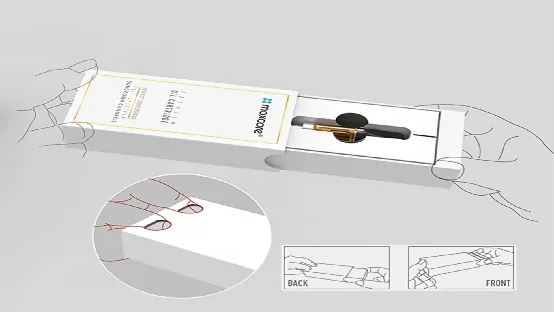
We develop functional cannabis vape packaging around the actual device. Our process considers device dimensions, component layout, opening method, product retention, handling, label areas, and child-resistant packaging options for eligible projects.
Overemphasis on Price
An unusually low quotation deserves closer examination rather than an immediate purchasing decision. A lower unit price may reflect differences in materials, testing, customization, packaging, quality control, tooling, or service scope.
For procurement teams, comparing the total project rather than only the unit price provides a clearer picture. Ask what is included in sampling, tooling, testing, packaging development, quality inspection, and after-sales support.
A custom cannabis vaporizers supplier should be able to explain the cost structure sufficiently for buyers to understand what they are actually purchasing. Transparent commercial terms make supplier comparisons more meaningful.
Weak Communication During Sampling
The sampling stage often reveals how a supplier will handle a larger project. Slow responses, inconsistent technical answers, undocumented changes, or unclear sample revisions can become more difficult to manage once production volumes increase.
We recommend recording agreed specifications and revision requirements throughout development. This gives both sides a common reference when evaluating prototypes and approving production.
For a B2B partnership, communication is not simply a customer-service issue. It directly affects engineering accuracy, production scheduling, quality control, and the ability to respond when requirements change.
No Clear Path From Prototype to Production
A final warning sign is the absence of a defined transition from prototype approval to mass production. A supplier should be able to explain how the approved sample becomes a controlled production specification.
At Maxcore, we connect design, development, production, and quality control through our one-stop OEM/ODM approach. We also connect hardware development with functional packaging, helping brands coordinate the device, packaging structure, and production requirements as a broader product system.
What a Stronger Supplier Evaluation Looks Like
Selecting a cannabis vape hardware manufacturer should involve more than comparing catalogs and quotations. Engineering support, quality systems, documentation, OEM/ODM capability, packaging development, communication, and production processes all deserve attention.
For brands seeking a custom cannabis vaporizers supplier, these factors can reveal whether a supplier is prepared to support a complete product-development project rather than simply ship a standard device. At Maxcore, we combine one-stop OEM/ODM manufacturing with functional cannabis vape packaging to help B2B customers move from concept and development toward controlled production while leaving final market compliance to applicable legal review and testing.