What Should You Confirm Before Choosing a Long-Term Cannabis Vape Hardware Manufacturer?
Choosing a supplier for a single vape launch is different from choosing a partner that may support multiple product generations. A long-term relationship affects engineering, quality control, customization, production continuity, and launch schedules. Before committing, we recommend looking beyond unit pricing and asking whether the cannabis vape hardware manufacturer can consistently meet technical and commercial requirements as your product portfolio develops.
Confirm Manufacturing and Quality-System Capabilities
The first discussion should cover how the supplier controls manufacturing quality. A capable cannabis vape hardware manufacturer should be able to explain its quality-management processes, inspection procedures, production controls, and corrective actions rather than simply presenting a factory tour or product catalog.
ISO 9001:2026 describes a quality management system as a framework for establishing, maintaining, and continually improving processes that help organizations consistently meet customer and applicable requirements. For buyers, the important question is therefore not only whether a supplier has certification, but how its quality system operates in actual production.
Ask how incoming components are inspected, how critical dimensions are controlled, how finished units are sampled, and how nonconforming products are handled. These details provide a more practical picture of manufacturing discipline than a certification logo alone.
Evaluate Hardware, Oil, and Formulation Compatibility
Cannabis vape hardware must work as a system. Cartridge geometry, heating elements, oil characteristics, airflow, operating temperature, and power delivery can influence the final vaping experience. A supplier should therefore be prepared to discuss compatibility testing rather than treating the heating component as an interchangeable commodity.
Independent research has demonstrated why this matters. One study examining ceramic-coil cartridges found substantial temperature variation among tested devices and observed that selected operating conditions could exceed temperatures associated with thermal decomposition of vitamin E acetate. The study does not establish that every ceramic system behaves the same way, but it illustrates why formulation and hardware testing should be considered together.
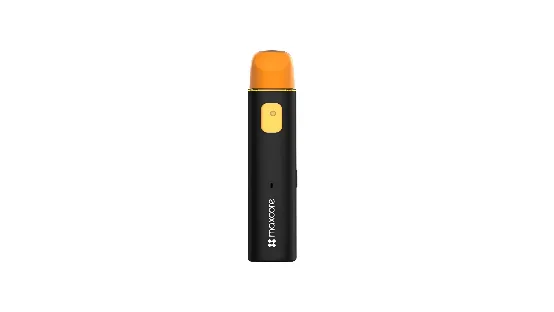
At Maxcore, we approach this engineering question through our POSTLESS® platform. Our Pixie ultra-compact postless all-in-one vaporizer uses our patented P30 ceramic coil, which we engineer for consistent flavor across more than 100 oil formulations. For brands developing multiple formulations, that compatibility experience can be relevant when evaluating a long-term vape OEM manufacturer.
Verify Safety Testing and Documentation
Electrical and battery safety should be addressed before production, not after a product reaches the market. UL Solutions states that UL 8139 evaluates the electrical, heating, battery, and charging systems of electronic cigarettes and vaping devices, including areas such as battery-management behavior, mechanical stress, accidental activation, interconnected-system compatibility, and environmental resilience.
When assessing a cannabis vape hardware manufacturer, ask which safety tests are performed internally and which are completed by independent laboratories. Request applicable test reports, certification details, component documentation, and clear information about what each test actually covers. UL also notes that UL 8139 does not evaluate consumables, so hardware certification should not be treated as evidence covering the oil itself.
For a long-term partnership, documentation should remain traceable as designs change. If a battery, heating component, PCB, material, or mechanical feature is revised, you should know what triggered the change and whether additional testing is required.
Examine Engineering and OEM Development Support
A reliable vape OEM manufacturer should be capable of supporting more than purchase orders. Ask whether its engineering team can review specifications, identify manufacturability concerns, develop prototypes, support testing, and implement controlled revisions.
This becomes particularly important when moving from an existing platform to a customized device. Clarify who owns tooling, how engineering changes are approved, what prototype quantities are available, and how production samples are compared with approved golden samples.
We design Pixie around a compact all-in-one format while incorporating a postless architecture, patented ceramic heating technology, built-in preheat, and a built-in child-lock. These features illustrate why hardware development involves multiple interacting design decisions rather than simply selecting a battery and coil.
Confirm Capacity, Continuity, and Communication
A supplier may deliver excellent samples yet struggle when volumes increase. Before signing a long-term agreement, confirm production capacity, lead-time expectations, component sourcing, inventory strategy, and contingency planning.
You should also understand the communication structure. Who handles engineering questions? Who approves quality issues? How quickly are corrective actions communicated? Can the supplier provide realistic production schedules rather than optimistic estimates?
A long-term cannabis vape hardware manufacturer should also explain how it manages component substitutions and supply disruptions. Any change involving a critical component should be documented and evaluated rather than introduced silently into production.
Discuss Commercial Terms and Product Protection
Price matters, but total cost is more useful than the initial unit quotation. Compare tooling, sampling, packaging, testing, minimum order quantities, lead times, replacement policies, and potential costs caused by quality failures or redesigns.
Intellectual property protection also deserves explicit attention. Discuss confidentiality agreements, ownership of custom designs and tooling, restrictions on reproducing proprietary components, and procedures for handling customer-specific files.
The same principle applies to product roadmaps. A vape OEM manufacturer should understand whether you expect one flagship product or a family of devices. This helps both sides plan customization, component availability, engineering resources, and future revisions more realistically.
Build the Partnership Around Verifiable Evidence
Selecting a long-term supplier should ultimately be an evidence-based process. Before committing, we recommend creating a supplier checklist covering quality systems, hardware performance, formulation compatibility, safety testing, engineering support, production capacity, communication, commercial terms, and IP protection.
At Maxcore, we see long-term OEM relationships as engineering partnerships rather than simple transactions. Our Pixie platform combines a compact design with POSTLESS® construction, a patented P30 ceramic coil, built-in preheat, and a built-in child-lock. For brands evaluating a cannabis vape hardware manufacturer, the goal is to establish whether the supplier can support today's requirements while maintaining the systems needed for tomorrow's products.