
What Should You Test Before Ordering Empty All-in-One Cannabis Vapes in Bulk?
A bulk hardware order can lock a cannabis vape solution into one device platform for months of filling, distribution, and customer use. For procurement teams, approving samples based only on appearance or a single successful puff is risky. A more useful approach is to test the hardware with the oil, operating conditions, and production process it will actually face.
At Maxcore, we develop cannabis vape hardware around oil behavior, ceramic heating, and atomization performance. Our approach to vaping solutions starts with sample validation and compatibility rather than treating hardware as a generic component.
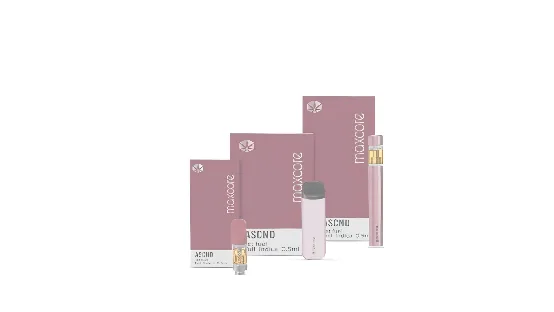
Test Compatibility With Your Actual Cannabis Oil
Oil compatibility should be the first major checkpoint. Cannabis formulations can differ in viscosity, cannabinoid concentration, terpene profile, and other characteristics. A device that performs well with demonstration oil may respond differently to the brand's production formulation.
We recommend filling samples with the actual oil intended for commercial production. Check whether the oil feeds consistently into the heating area and whether the device delivers stable vapor during repeated draws. This can reveal poor saturation, restricted flow, leakage, clogging, or inconsistent atomization before a large purchase is approved.
Evaluate Ceramic Heating and Atomization
The heating system directly affects how the formulation is converted into aerosol. Testing should cover more than whether the device produces vapor. Buyers should examine draw response, vapor consistency, flavor changes, heating stability, and performance as the oil level falls.
Ceramic heating systems require particular attention to oil saturation and heat distribution. A mismatch between the oil and heating architecture can contribute to uneven atomization or undesirable heating behavior. We therefore evaluate heating performance together with the oil rather than approving the ceramic component in isolation.
Check Leakage, Airflow, and Structural Integrity
Leakage is an important practical check for empty all-in-one cannabis vapes. Inspect the oil chamber, seals, connections, mouthpiece, and airflow path after filling and storage. Look for seepage, condensation, loose components, or changes in draw resistance.
Testing should extend beyond the laboratory bench. Temperature changes and different storage orientations can expose weaknesses that are not visible during initial inspection. For a B2B buyer, these checks connect prototype performance with actual distribution conditions.
Validate Battery and Electrical Safety
A rechargeable all-in-one device also needs electrical and battery evaluation. UL Solutions notes that UL 8139 addresses electrical, heating, battery, and charging systems in electronic cigarettes and vaping devices, including battery-management performance, mechanical stress, accidental activation, and environmental resilience.
Before a bulk order, confirm the battery specification, charging behavior, protection functions, activation controls, and device response under foreseeable operating conditions. Required safety documentation and market-specific testing should also be reviewed before production approval. This evidence can also help teams define supplier acceptance criteria, reduce avoidable rework, and align engineering decisions with procurement requirements.
This step deserves attention because lithium-ion battery failures can create serious fire and burn hazards. A 2026 CPSC recall involving a portable vaporizer illustrates why battery reliability should be treated as a procurement requirement rather than a cosmetic feature.
Review Manufacturing Consistency and Quality Control
A good sample is only useful if mass production can reproduce it. Request information about incoming component inspection, assembly controls, functional testing, sampling procedures, and final inspection. Compare multiple samples rather than relying on one unit.
At Maxcore, we integrate quality control throughout custom vape hardware development and vape manufacturing, beginning with quality planning and design audits. Each device undergoes compatibility testing with customer oils, evaluation based on real-world user feedback, and final pre-shipment inspection.
We also provide optional on-site oil-filling guidance and responsive after-sales support. These services can help cannabis vape brands maintain consistency when moving from engineering samples to production quantities.
Confirm Regulatory and Documentation Requirements
Hardware approval should be connected to the market where the finished product will be sold. Buyers should identify applicable requirements for batteries, electrical systems, packaging, labeling, transportation, and finished cannabis products before committing to a production design.
The FDA has reported that THC-containing vaping products were associated with serious lung injuries and has emphasized concerns about certain additives, including vitamin E acetate. For procurement teams, hardware selection should therefore be coordinated with the broader product compliance process.
Build a Pre-Bulk Testing Checklist
Before approving a purchase order, consolidate results into a documented checklist. Include oil compatibility, filling behavior, leakage, airflow, ceramic heating, atomization consistency, battery and charging performance, mechanical integrity, packaging, and production consistency.
At Maxcore, we treat sample testing as part of the engineering process for vaping solutions, not simply a final inspection step. When a cannabis brand shares its oil characteristics, filling process, and target requirements, we can use those inputs to guide hardware development and validation.
Scale a Cannabis Vape Solution With Greater Confidence
Bulk purchasing works best when hardware has already been challenged under conditions close to commercial use. Oil compatibility, ceramic heating, atomization, leakage, airflow, battery safety, manufacturing consistency, and documentation should all be reviewed before production approval.
At Maxcore, we combine custom development, compatibility testing, design audits, and manufacturing quality control to support cannabis brands seeking reliable vaping solutions. By validating the complete hardware-and-oil combination before scaling a cannabis vape solution, buyers can establish a stronger foundation for consistent results.