Which Manufacturing Capabilities Matter Most for a Premium Cannabis Oil Launch?
A premium cannabis oil launch places greater demands on hardware manufacturing than simply producing an attractive device at scale. Brands need consistent vapor performance, controlled materials, reliable power, oil compatibility, and repeatable production. The supplier must also translate these requirements into measurable quality standards. For procurement and product teams, evaluating a cannabis vape hardware manufacturer should therefore focus on manufacturing depth, engineering control, testing capabilities, and the ability to preserve performance throughout the product lifecycle.
Prioritize Oil and Heating Compatibility
The first capability to examine is whether a supplier understands the relationship between oil formulation and the heating system. Viscosity, oil composition, fill level, airflow, and heating behavior can affect delivery and vapor consistency. Research has also identified high localized temperatures and differences in ceramic, metal, and polymer components among cannabis vaping devices, reinforcing the importance of controlled hardware design and testing.
A premium launch should therefore begin with compatibility testing rather than selecting hardware based primarily on appearance. The supplier should be able to evaluate the intended formulation and determine whether its heating architecture can provide consistent vaporization without creating avoidable performance problems.
Examine Heating and Temperature Control
Heating performance deserves particular attention because temperature directly affects vaporization behavior. Research on cannabis vaping devices has shown that operating conditions can produce substantial temperature variation, while excessive temperatures may alter the chemistry of materials or formulations.
For this reason, brands should ask manufacturers how heating elements are designed, how output is controlled, and how performance is evaluated during repeated use. A supplier should be able to explain the relationship between power delivery, heating architecture, oil replenishment, and expected vapor output rather than simply quoting the nominal battery voltage.
Evaluate Power Consistency
Battery performance is another important manufacturing capability for premium devices. A product that produces noticeably different vapor from the beginning to the end of its usable life can undermine the consistency expected from a premium launch.
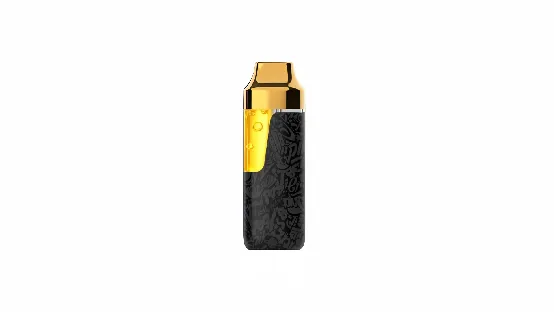
Shiny addresses this requirement with a constant power output design intended to deliver consistent vapor from start to finish. Its positioning also combines a compact format with a premium appearance, showing how electrical performance and industrial design can be developed as part of the same product concept.
At Maxcore, we consider consistent power delivery part of the overall hardware experience rather than an isolated battery specification. This is particularly relevant when brands want the final user experience to remain predictable across the product's operating cycle.
Assess Material and Component Control
Material selection should be treated as a technical issue, not merely an aesthetic decision. The components that contact oil or experience heat should be clearly identified, and production controls should ensure that approved materials remain consistent between batches.
Recent research involving commercially available cannabis vape products found that metals associated with device components contributed to variability in tested vape liquids and that metal particles were detected in generated aerosols. The findings do not establish that every device presents the same behavior, but they demonstrate why component selection and analytical validation deserve attention.
A capable cannabis vape hardware manufacturer should consequently provide clear component specifications and support appropriate material and product testing before commercial approval.
Demand Repeatable Manufacturing
Premium positioning means little if production quality changes from one batch to another. Procurement teams should investigate incoming-material inspection, assembly controls, process monitoring, final inspection, batch identification, and change management.
The supplier should also demonstrate how engineering specifications are transferred from prototypes into mass production. A product that performs well in a small pilot run needs controlled processes to preserve the same design intent when order quantities increase.
For brands comparing disposable vape pen manufacturers, this distinction is particularly important. The supplier's manufacturing system can matter as much as the device concept itself when a successful launch needs to transition into sustained production.
Look for Meaningful Testing Infrastructure
Testing should cover the conditions under which the hardware is actually expected to perform. Puffing behavior, power output, oil delivery, leakage, activation, and repeated-use performance can all be evaluated under controlled conditions.
ISO 20768 establishes standard conditions and technical requirements for routine analytical vaping machines, while its 2025 amendment corrected puff-profile requirements. The standard also makes clear that machine vaping conditions do not represent every form of human puffing behavior.
A strong supplier should therefore use standardized testing where appropriate while recognizing its limitations. Brands should ask for actual test methods and acceptance criteria rather than relying on general claims such as “stable performance.”
Consider Design and User Experience Together
Premium hardware also needs to communicate its positioning through physical design. Size, appearance, visibility of the oil, airflow experience, and other interaction points can influence how users perceive the finished product.
Shiny combines a compact form with a built-in light designed to enhance oil visibility. Its POSTLESS® design is positioned around purer taste, while the overall concept combines visual refinement with functional performance.
We can develop these elements as a coordinated hardware concept at Maxcore. Rather than separating engineering from industrial design, we consider how the heating system, power delivery, physical dimensions, and visual features contribute to a unified product experience.
Choose a Manufacturer Built for Long-Term Development
A premium launch should not be evaluated solely on whether the first production order can be completed. Brands should also consider whether their supplier can support future revisions, new configurations, testing requirements, and production growth.
When assessing a cannabis vape hardware manufacturer, we recommend examining engineering communication, quality documentation, customization capabilities, production scalability, and responsiveness to formulation changes. These factors can determine how efficiently a product evolves after launch.
At Maxcore, we approach hardware development as an integrated process covering design, engineering, manufacturing, and product requirements. Shiny demonstrates this philosophy by combining POSTLESS® architecture, built-in oil visibility, compact premium design, and constant power output in one platform.
Build the Launch Around Manufacturing Capability
A premium cannabis oil product requires more than a visually distinctive device. Oil compatibility, heating control, power consistency, material management, manufacturing repeatability, testing infrastructure, and design integration all contribute to the final result.
Brands evaluating disposable vape pen manufacturers should therefore look beyond unit price and prototype appearance. The more useful question is whether the supplier has the engineering and production capabilities required to maintain the intended product experience at commercial scale.
We believe Maxcore can support brands that need this broader development approach. By combining hardware engineering with controlled manufacturing and customizable product design, we can help turn a premium oil concept into a production-ready device with defined performance expectations and a consistent user experience.