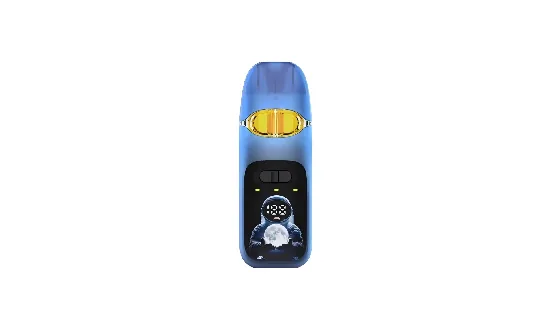
How Do Two Oil Formulations Affect Dual-Chamber Cannabis Vape Hardware Selection?
Two oils in one vape device may look like a straightforward packaging decision, but the engineering challenge is more complex. Different formulations can have different viscosity, flow behavior, thermal response, and composition. For manufacturers developing dual-chamber hardware, these differences can affect oil delivery, heater configuration, chamber geometry, and operating consistency. That makes formulation analysis an important starting point for hardware selection rather than a final-stage consideration.
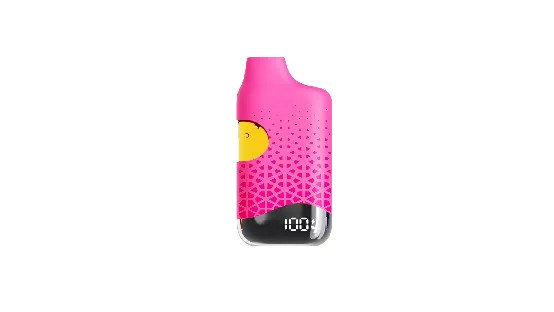
Formulation Properties Should Guide Hardware Selection
Oil formulation directly influences how efficiently material can reach the heating area. Research on cannabis vaping systems notes that extract compositions vary considerably, while viscosity can determine whether an oil can move effectively through a reservoir and reach an atomizer. Terpenes, for example, can influence viscosity and therefore the physical behavior of vape liquids.
A dual-chamber design therefore should not automatically use identical heating structures for both oils. If one chamber contains a relatively free-flowing formulation while the other contains a more viscous material, the same delivery path may not provide equivalent performance. For a Maxcore vape platform, evaluating the two formulations before finalizing the atomization architecture can help engineers identify these differences early.
Why Viscosity Matters in a Dual-Chamber System
Viscosity affects more than filling. It can influence how quickly an oil moves toward the heating element, how consistently the atomizer remains supplied, and how the formulation behaves during repeated operation. Research has shown that high-viscosity liquids can create challenges for conventional wick-based systems because liquid replenishment may not keep pace with vaporization.
This becomes especially important when two oils share one device. A chamber designed around the flow characteristics of one formulation may not be appropriate for another. Instead of treating both chambers as interchangeable, manufacturers can evaluate oil viscosity, flow behavior, and atomization characteristics independently.
Ceramic Heating Design Should Match the Oil
The heating element is another major consideration. Ceramic atomizers are already used in cannabis vape hardware, and published research has examined ceramic heating structures alongside other cartridge configurations. Studies have also demonstrated that heating conditions can vary substantially between devices and operating settings.
At Maxcore, we approach ceramic atomization as a system rather than selecting a generic heater and placing it behind two reservoirs. Our engineers evaluate the formulation first, then consider the ceramic substrate and heating-track configuration needed for the intended application. This approach allows the oil-delivery path and heating structure to be considered together.
As a cannabis vaporization technology company, we also recognize that thermal behavior deserves careful engineering attention. Published experiments have measured substantial temperature variation in cannabis vaporization systems, demonstrating why heating characteristics should be evaluated rather than assumed from nominal electrical specifications alone.
Chamber Geometry Can Affect Delivery Consistency
Dual-chamber hardware introduces another layer of design decisions. Each reservoir needs adequate oil storage while maintaining a controlled route toward its corresponding atomizer. Differences in chamber dimensions, outlet configuration, and internal surfaces can influence how formulations move through the device.
For manufacturers, this means chamber geometry should be considered alongside formulation properties. A more viscous oil may require a different delivery architecture from a lower-viscosity formulation. The objective is not necessarily to make both chambers identical, but to create a balanced system in which each formulation has an appropriate hardware interface.
Testing Two Oils as Two Engineering Systems
Laboratory evaluation is particularly valuable when a dual-chamber product uses substantially different formulations. Rather than relying only on theoretical compatibility, development teams can evaluate filling behavior, oil movement, heater response, and aerosol generation under controlled conditions.
At Maxcore, our development process uses real-oil testing to connect formulation analysis with ceramic engineering. This gives our engineers a way to examine how the selected substrate, heating track, and delivery structure interact with the target material. For a Maxcore vape development project, such testing can reveal whether the two chambers require similar or differentiated engineering approaches.
Quality considerations should also extend to materials exposed to the oil and heating environment. Peer-reviewed investigations of cannabis vaping devices have identified ceramic, metal, polymer, and other internal components, highlighting the importance of evaluating the complete hardware assembly rather than focusing only on the heating element.
Building Hardware Around Formulation Differences
A dual-chamber vape should ultimately be treated as an integrated hardware system. The oil, reservoir, delivery path, ceramic substrate, heating track, electrical configuration, and airflow structure all contribute to the overall design. Changing one component can influence the requirements of the others.
That systems-level approach is central to our work as a cannabis vaporization technology company. We support development around different suitable formulations, including distillate, live resin, rosin, and other oil types, while recognizing that each formulation should be evaluated according to its own physical characteristics. Rather than forcing different oils into one standardized architecture, we develop the hardware around the intended formulation requirements.
Turning Oil Analysis Into Better Hardware Decisions
For cannabis vape brands and hardware buyers, the key question is not simply whether a device can accommodate two oils. The more useful question is whether its two chambers and atomization systems have been engineered around the characteristics of those oils.
Our approach at Maxcore connects oil analysis, ceramic engineering, and real-oil testing before hardware specifications are finalized. As a cannabis vaporization technology company, we use this process to help development teams evaluate formulation compatibility, delivery behavior, and heating architecture as connected engineering considerations.
For brands considering a Maxcore vape, this formulation-driven methodology provides a practical framework for discussing dual-chamber requirements with an experienced hardware development partner. The result is a more deliberate path from oil characteristics to chamber design, ceramic selection, and overall device architecture.