How Do You Evaluate Airflow in Dual-Chamber Cannabis Vape Hardware?
Airflow is easy to underestimate when evaluating a dual-chamber cannabis vape. Two reservoirs, heating paths, and air routes can interact, so a device that feels acceptable with one chamber may behave differently when the second path is selected or combined. For B2B teams evaluating a Maxcore vape, airflow evaluation should examine pressure drop, flow rate, activation behavior, aerosol consistency, and performance across realistic oil conditions.
Why Airflow Matters to a Maxcore vape
Airflow determines how much air passes through the vaporization system during a draw. Research on electronic cigarettes has shown that pressure drop and airflow requirements vary substantially among devices, while changes in airflow can affect heating conditions and aerosol output. That makes airflow a measurable engineering characteristic rather than simply a matter of preference.
For dual-chamber hardware, evaluation becomes more demanding. Each chamber may have its own oil reservoir and vaporization route, but the final draw can depend on shared mouthpiece geometry, inlet openings, internal channels, seals, and switching structures. A balanced design should avoid making one chamber noticeably harder to draw than the other.
Measure Pressure Drop and Flow Rate
The first practical test for a dual-chamber system is to measure pressure drop at controlled airflow rates. A larger pressure drop generally means greater resistance to inhalation. Published testing has found meaningful differences in pressure drop even among products with similar formats, reinforcing the value of objective measurements and production quality control.
We recommend recording a pressure-drop-versus-flow curve for each chamber independently. The same measurement should then be repeated when both chambers are involved in the intended operating mode. This creates a baseline for comparing prototypes, production lots, and customized configurations.
Check Airflow Balance Between Chambers
A dual-chamber device should not be judged only by its average airflow. B2B validation teams should compare Chamber A and Chamber B under identical conditions. Look for differences in draw resistance, activation threshold, airflow stability, and aerosol output.
If one chamber requires substantially more effort, the cause may be an unequal inlet, channel restriction, seal condition, condensation, or heating-path geometry.
Evaluate Activation and Draw Dynamics
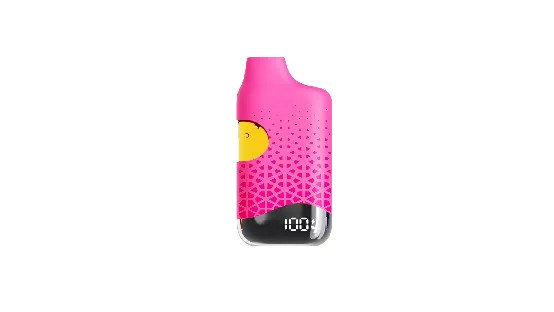
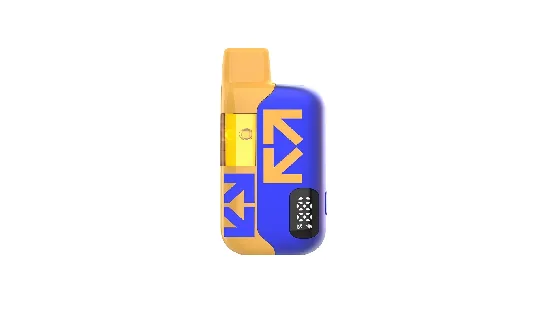
Airflow also interacts with the activation system. Our Dual model uses inhale activation, so airflow sensing is part of the overall user interface. Its published specification includes a P20 ceramic core, 3.6V output, 265mAh battery, and Type-C charging, with tank configurations of 0.5+0.5ml or 1.0+1.0ml.
For a Maxcore vape, we would evaluate the minimum airflow needed for reliable activation, the time between draw initiation and heating response, and the possibility of false activation. These tests should be repeated across both chambers because a different airflow path can change the pressure signal reaching the sensor.
Test Airflow With the Actual Oil
Airflow cannot be separated completely from oil behavior. Viscosity, temperature, formulation, and oil level can influence how consistently material reaches the ceramic heating surface. A test performed only with an empty device or a low-viscosity surrogate may miss problems that appear during commercial use.
Our development process starts with oil behavior and compatibility testing before hardware configurations are finalized. We support partners through product research, oil compatibility testing, custom hardware development, and production scale-up, allowing airflow observations to be connected with real formulation requirements.
Watch for Condensation and Restriction
A good airflow test should examine how the pathway changes during extended use. Condensed material can accumulate around internal passages or the mouthpiece and gradually increase resistance. Laboratory work has shown that airflow and pressure drop can change across devices and during prolonged testing, making first-puff measurements insufficient for a complete evaluation.
For a postless vape company, this is especially relevant when the architecture uses open internal oil and airflow relationships. Our POSTLESS® platform incorporates dual-airway designs on applicable hardware, with the goal of supporting smoother airflow and reducing clog-related performance issues.
Build a Production-Level Airflow Protocol
Prototype testing should lead to a repeatable quality-control method. We suggest defining target ranges for pressure drop, activation flow, draw duration, and airflow variation between chambers.
For B2B programs working with a postless vape company, the protocol should document test temperature, oil formulation, fill level, puff profile, device orientation, and measurement equipment.
Use Airflow Data to Guide Hardware Decisions
Airflow should ultimately be evaluated as part of the complete vaporization system. A low-resistance pathway is not automatically better if it compromises activation reliability or changes heating behavior. Likewise, a restrictive draw may be intentional for a particular product experience, but it should remain consistent and reproducible.
As a postless vape company focused on cannabis hardware, we use airflow results alongside oil compatibility, ceramic heating performance, and mechanical validation.
Turning Airflow Testing Into Commercial Readiness
For a Maxcore vape program, airflow evaluation is most useful when it begins with measurable engineering targets and ends with production controls. Our Dual hardware combines dual chambers with a postless structure, inhale activation, P20 ceramic heating, 265mAh battery capacity, and 3.6V output, while supporting 0.5+0.5ml or 1.0+1.0ml tank configurations.
We help cannabis brands connect airflow testing with oil compatibility, custom hardware development, and manufacturing scale-up. By treating draw resistance, chamber balance, activation, condensation, and long-run consistency as connected variables, we can help partners move from a promising prototype toward differentiated, market-ready hardware.