How Does an Empty Dual-Chamber Cannabis Vape Work with Two Oils or Flavors?
An empty dual-chamber cannabis vape is designed around one simple concept: two oil reservoirs can exist inside one device while remaining separately controlled. For cannabis brands, this architecture creates opportunities for dual-flavor products, paired formulations, and differentiated product lines without requiring two separate devices. The engineering challenge is keeping the chambers isolated while coordinating oil delivery, heating, airflow, and user selection. ASTM guidance similarly treats reservoirs, components, design elements, and basic functions as important characteristics when evaluating cannabis extract vaporizer systems.
How a Dual-Chamber System Separates Two Oils
The basic architecture uses two independent reservoirs instead of one shared tank. Each chamber stores its own oil, with separate fluid paths leading toward its corresponding heating area. This separation is essential because the two formulations may have different viscosities, flavors, cannabinoid profiles, or performance characteristics.
A well-designed system prevents the contents of one chamber from freely migrating into the other. The separation can be created through dedicated reservoirs, seals, channels, and heating components. For brands developing vaping solutions, the objective is not simply to fit two tanks into one shell but to create two controlled oil systems that operate reliably within the same device.
How Heating Works with Two Oils
Dual-chamber hardware generally requires each oil reservoir to have its own heating path. When the system selects one chamber, the corresponding oil delivery route and heating element are activated. Some architectures can also allow both chambers to operate together, depending on the electrical and airflow design.
This arrangement gives brands greater flexibility when developing products around two distinct formulations. However, the two heating systems must remain sufficiently independent to avoid unintended heat transfer or cross-contamination between reservoirs.
We approach this as a complete hardware problem rather than treating the ceramic core, reservoir, and battery as separate components. Electrical output, resistance, oil viscosity, reservoir geometry, and thermal behavior all need to be evaluated together before a dual-chamber concept is ready for production.
How Flavor Selection Changes the Oil Path
A dual-flavor product needs a reliable way to determine which chamber feeds the vaporization system. Depending on the architecture, selection can involve a mechanical selector, electronic controls, or another switching mechanism.
The important engineering requirement is clear separation. If the user selects Chamber A, the system should not unintentionally draw substantial oil from Chamber B. The same principle applies in reverse. If both chambers are designed to operate together, the manufacturer must establish how the two vapor streams interact before reaching the shared mouthpiece.
For vaping solutions, this means the selector cannot be evaluated independently from the internal airflow and oil pathways. A change in one component can affect pressure, draw resistance, heating behavior, and the consistency of the final vapor path.
Why Reservoir and Airflow Design Matter
Two reservoirs naturally require more internal organization than a single-tank configuration. Engineers must allocate space for the tanks, heating elements, seals, electrical connections, airflow channels, and housing while maintaining appropriate tolerances.
Airflow becomes particularly important when two vapor paths converge into one outlet. The internal channels should be designed so that switching between chambers does not create major differences in draw characteristics. If both chambers can operate simultaneously, the system also needs to account for the combined airflow requirements.
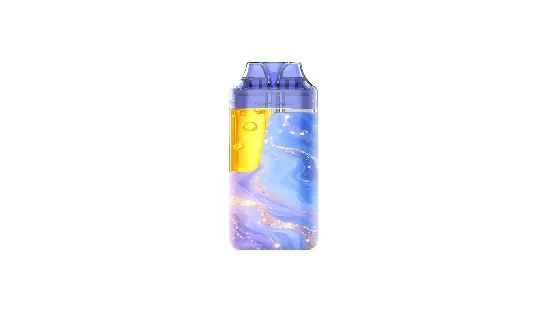
Our Maxcore Dual is a dual-tank postless all-in-one vaporizer designed around dual chambers and dual flavors. Its architecture uses two 0.5 mL or two 1.0 mL tank configurations, P20 ceramic cores, inhale activation, and a Type-C charging interface. These specifications illustrate how the reservoir, heating, power, and activation systems must be coordinated within one compact platform.
What Empty Hardware Buyers Should Test
Before selecting an empty dual-chamber platform, buyers should test more than whether both reservoirs can be filled. They should examine dimensional consistency, sealing performance, oil compatibility, heating consistency, airflow balance, and switching reliability.
Oil compatibility deserves particular attention. Two oils may behave differently even when their nominal viscosity appears similar. Formulation ingredients, additives, and storage conditions can influence how efficiently oil reaches the heating area. Testing with representative customer formulations therefore provides more useful evidence than relying solely on theoretical specifications.
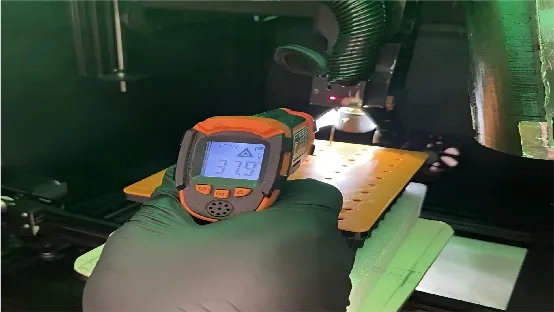
Within our custom vape OEM/ODM workflow, we combine hardware development with real-oil testing. Our process covers market research, product definition, engineering, prototype evaluation, manufacturing, and post-production support. This allows us to evaluate how a dual-chamber design performs with the formulations it is actually expected to handle.
Where Dual Chambers Fit the Cannabis Vaping Supply Chain
For purchasing teams, a dual-chamber platform affects more than device engineering. It can influence filling operations, inventory planning, packaging, quality control, and product configuration across the cannabis vaping supply chain.
Two reservoirs mean that filling procedures need to account for separate oil paths and volumes. Production teams also need clear identification and inspection criteria to prevent formulation mix-ups. Packaging and labeling requirements may likewise become more complex when one device contains two distinct formulations.
A coordinated cannabis vaping supply chain therefore depends on communication between the hardware developer, oil supplier, filling operation, packaging team, and quality-control personnel. Establishing these interfaces early can reduce production surprises when the project moves from prototypes to larger batches.
Designing a Dual-Chamber Product for Production
A dual-chamber vape should be evaluated as a complete product architecture rather than simply a two-tank variation. Reservoir isolation, ceramic heating, airflow, electrical output, activation, sealing, and external design all influence one another.
At Maxcore, we bring market research, custom vape hardware development, real-oil testing, vape manufacturing, and post-production support into one coordinated OEM/ODM workflow. For brands building vaping solutions, this integrated process helps us connect product requirements with engineering validation and manufacturing readiness.
Building Two-Oil Hardware Around One Consistent System
An empty dual-chamber cannabis vape works by separating two oil reservoirs and controlling how each formulation reaches its respective heating system. The most important considerations are reservoir isolation, oil-path design, heating consistency, airflow, switching reliability, and manufacturing controls.
For the cannabis vaping supply chain, the value of this architecture also depends on how easily it can move from concept to filling, testing, packaging, and repeat production. At Maxcore, we use our custom OEM/ODM workflow to develop and validate dual-chamber hardware around real product requirements, helping cannabis brands move from a two-oil concept toward a manufacturable device.