How Does Cartridge Hardware Design Affect Cannabis Oil Filling Efficiency?
Cannabis oil filling efficiency depends on more than the filling machine or operator technique. Cartridge geometry, reservoir access, internal structure, oil path, sealing system, and component tolerances can all affect how efficiently a cartridge is filled and prepared for final assembly. ASTM's guidance for cannabis extract vaporizers identifies components, design elements, and basic functions as important device characteristics. For brands developing vaping solutions, filling performance should therefore be considered during hardware design rather than after the cartridge is finalized.

Start With Reservoir Geometry
The reservoir is the most obvious hardware feature affecting filling, but its design involves more than nominal capacity. Internal volume, shape, opening position, wall geometry, and available headspace can influence how easily oil enters and settles inside the cartridge.
A well-defined reservoir should provide a predictable path for filling equipment to introduce oil without unnecessary obstruction. Irregular internal structures or poorly positioned openings can make filling slower and increase the possibility of inconsistent fill levels.
ASTM's classification work for electronic cannabinoid delivery systems specifically recognizes reservoir characteristics as one of the factors used to classify device configurations.
For B2B buyers, reservoir geometry should therefore be included in the initial hardware specification instead of being treated as a purely cosmetic engineering decision.
Design the Filling Port for Access
Filling access is another important consideration. The opening needs to accommodate the selected filling method while maintaining the required sealing and assembly structure.
A filling port that is too narrow can restrict the filling process, while an opening that is unnecessarily large may complicate sealing or increase the amount of oil exposed during production. The ideal configuration depends on the oil characteristics, filling equipment, target volume, and cartridge architecture.
For vaping solutions produced at scale, engineering teams should test filling speed and repeatability using production-representative equipment. This can reveal whether the cartridge design works efficiently with the intended manufacturing process rather than only under laboratory conditions.
Account for Cannabis Oil Flow Behavior
Oil viscosity and flow behavior have a direct relationship with filling efficiency. A formulation that moves slowly through a narrow filling path may require different process conditions from a more fluid formulation.
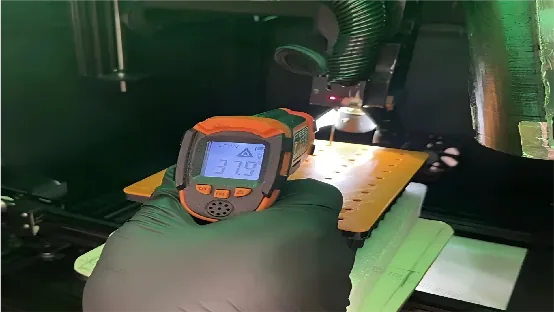
Temperature can also affect flow behavior, meaning that the filling process should be evaluated under the actual conditions expected during manufacturing. Rather than assuming that all cannabis oils behave similarly, brands should provide representative formulations during hardware and process development.
The same principle applies after filling. The internal reservoir and oil path should be designed so that the formulation remains appropriately positioned without creating avoidable leakage or feeding problems.
This is why cartridge design and filling-process development should proceed together. A cartridge that is easy to manufacture but unsuitable for the intended oil may ultimately create more production challenges than a design optimized around the complete system.
Consider Sealing and Tolerances
Efficient filling also depends on what happens immediately after oil enters the reservoir. Seals, plugs, caps, mouthpiece interfaces, and other closing components must maintain their intended positions and tolerances during assembly.
Small dimensional variations can become significant when multiple components must align precisely. Excessive tolerance variation may cause inconsistent sealing, while overly tight tolerances can make automated assembly more difficult.
Material selection is also relevant. ASTM's work on restricted substances for cannabis and hemp extract vaporizers specifically considers materials that may have direct or indirect contact with liquid extract, including metals, ceramics, glass, plastics, and polymers.
For manufacturers, this makes material selection and dimensional control part of the filling strategy rather than separate quality concerns.
Optimize the Internal Oil Path
The internal architecture should accommodate both filling and subsequent oil movement. Reservoir openings, channels, heating components, and airflow structures can occupy the same limited space, so each feature needs to be positioned deliberately.
A complicated internal structure may increase assembly requirements or make filling access less convenient. Conversely, an overly simplified structure may not provide the oil-control characteristics required for consistent device operation.
ASTM's vape-device safety and testing initiative identifies device hardware design, components and their interactions, atomizers, vapor paths, airflow, and performance among its areas of focus.
This supports a system-level approach: filling efficiency should not be optimized independently from the components responsible for later vaporization.
Design for the Filling Equipment
A cartridge can perform well as a prototype yet create difficulties when introduced to a production line. Buyers should therefore establish the intended filling method early and verify that the cartridge accommodates it.
Key considerations include nozzle access, filling angle, positioning accuracy, fill-volume tolerance, sealing sequence, and the time required for each filling cycle. Automated equipment may also require consistent cartridge dimensions so that every unit can be positioned accurately.
For brands planning vaping solutions at commercial scale, these details can influence throughput and reject rates. Designing the cartridge around the actual filling process can reduce unnecessary adjustments during trial production.
Integrate Filling Into Product Development
At Maxcore, we turn the product brief into a manufacturable custom vape hardware concept. We align product architecture, industrial design, mechanical engineering, and prototype requirements before approving the proof of concept.
Our development process begins by finalizing the product concept and system architecture. We then complete and approve the industrial design, review and release mechanical drawings, build and evaluate functional prototypes, and review and approve the Proof of Concept (POC).
This workflow allows filling requirements to be considered before the design is locked. Reservoir dimensions, filling access, sealing components, and assembly relationships can be reviewed alongside the overall cartridge architecture.
Validate Before Production Scaling
Prototype filling trials should use the intended oil and representative production equipment whenever possible. Teams can measure filling time, volume consistency, leakage, sealing performance, and assembly compatibility.
At Maxcore, we can incorporate these requirements into our OEM/ODM development workflow so that design decisions are evaluated alongside manufacturing readiness. A successful POC should demonstrate more than basic device functionality; it should provide evidence that the hardware can support the intended production process.
For brands considering one stop vape manufacturing services, integrating product definition, engineering, prototyping, and manufacturing preparation within one workflow can also reduce communication gaps between development and production teams.
Conclusion: Design the Cartridge Around the Filling Process
Cartridge hardware design has a direct influence on cannabis oil filling efficiency. Reservoir geometry, filling-port access, oil flow behavior, sealing, tolerances, internal architecture, and equipment compatibility should all be considered before production begins.
At Maxcore, we connect product architecture, industrial design, mechanical engineering, prototyping, and production preparation within our custom vape development process. For brands seeking vaping solutions and one stop vape manufacturing, this integrated approach can help turn filling requirements into a practical, manufacturable cartridge design.