What Should Buyers Inspect in a Pre-Production 510 Cartridge Sample?
A pre-production 510 cartridge sample is more than a visual prototype. For cannabis vape brands, it is an opportunity to verify whether the proposed hardware can meet requirements for filling, oil compatibility, airflow, heating, assembly, and manufacturing consistency before a larger production commitment. Careful sample inspection also helps buyers identify design issues early, when adjustments are generally easier to make. For B2B vaping solutions, a structured inspection should cover both visible details and functional performance.

Start With the Physical Design and 510 Connection
The first inspection should confirm that the sample matches the approved drawings, dimensions, materials, and configuration. Buyers can check the cartridge body, mouthpiece, tank, base, seals, and threaded connection for visible defects, inconsistent assembly, or dimensional deviations.
The 510 connection deserves particular attention because it determines mechanical compatibility with the intended battery. The threads should engage smoothly without excessive looseness or resistance. The cartridge should also seat correctly and maintain reliable electrical contact once attached to the selected battery.
At this stage, buyers should compare the physical sample against the approved specification rather than relying on appearance alone. Consistent dimensional control becomes particularly important when a custom design will eventually be transferred into volume manufacturing.
Inspect the Oil Reservoir and Sealing System
The reservoir should be examined for cracks, deformation, contamination, and other visible defects. Buyers should also inspect the interfaces between the reservoir, base, mouthpiece, and sealing components because these areas can affect oil containment during filling, storage, and use.
A practical sample evaluation should include an appropriate leak and storage assessment under conditions representative of the intended application. The exact test parameters should be established with the manufacturer and based on the final product requirements rather than assumed from another cartridge.
Materials also deserve scrutiny. Recent research has identified metal particles and elemental components in examined cannabis vaping hardware, including components associated with heating and wicking systems. This makes material selection, supplier control, and appropriate analytical testing relevant parts of commercial hardware qualification.
Evaluate Oil Compatibility Before Approval
A cartridge cannot be fully evaluated without considering the formulation it is expected to carry. Cannabis oils can differ in viscosity and composition, affecting how efficiently liquid reaches the heating element and how the cartridge behaves during repeated activation.
We recommend testing samples with the customer's intended oil rather than approving hardware solely from an empty-cartridge inspection. The evaluation can examine filling behavior, oil movement, leakage, visible air bubbles, and changes after storage or repeated use.
For brands developing custom vape hardware design, this step is particularly important because the formulation and hardware should be considered together. A cartridge architecture that works with one oil may require adjustments when the formulation changes.
Test Airflow and Draw Behavior
Airflow is another key area to inspect before production approval. Buyers should evaluate whether the draw feels consistent across multiple samples rather than judging a single cartridge. Differences in inlet openings, internal channels, seals, and assembly can influence airflow resistance.
Functional testing should use the intended battery and representative operating conditions. Buyers can record draw behavior, activation response, vapor production, and any signs of restricted airflow or flooding. The goal is not simply to determine whether a cartridge produces vapor, but whether its performance remains sufficiently consistent for the intended product specification.
This type of repeat testing helps distinguish a good individual prototype from a repeatable hardware design. For commercial vaping solutions, that distinction matters because production quantities introduce manufacturing variation that may not appear in one sample.
Examine Heating and Battery Compatibility
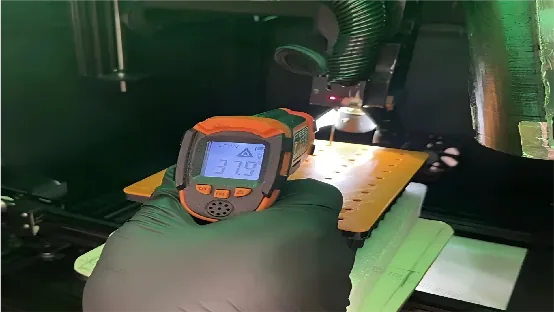
The heating system should be inspected alongside the battery rather than treated as an isolated component. Buyers should confirm the agreed electrical specifications and evaluate activation behavior with the intended power source.
Repeated activation can help reveal problems involving inconsistent heating, delayed response, excessive condensation, or changes in vapor output. Testing should follow defined conditions so that samples can be compared objectively.
Cannabis vaporizer testing is also an active area of industry standardization. ASTM's D37 committee includes work addressing testing and safety considerations for cannabis devices, while recent technical research has examined challenges in analyzing metals from cannabinoid-delivery aerosols. These developments reinforce the value of documented, repeatable hardware testing.
Check Manufacturing Quality and Sample Consistency
A pre-production sample should represent the manufacturing process that will ultimately produce the commercial cartridge as closely as possible. Buyers should therefore ask whether the sample was made with production-intent materials, tooling, components, and assembly procedures.
Several samples should be compared side by side for dimensions, appearance, airflow, electrical contact, sealing, and other agreed characteristics. ASTM guidance on test-sample preparation emphasizes consistent preparation and careful sample control when conducting validation work.
We treat this distinction between a prototype and a production-intent sample as important. A visually successful prototype does not automatically demonstrate that the same performance can be maintained across a production batch.
Review Documentation and Quality Controls
Before approving the sample, buyers should review the applicable drawings, material information, inspection criteria, test records, and agreed acceptance limits. These documents create a reference point for later production inspection.
At Maxcore, we integrate quality control into our custom vape hardware development and manufacturing process. We begin with detailed quality planning and design audits, then evaluate compatibility with customer oils and conduct functional assessments based on real-world user feedback.
We also use final pre-shipment inspection as part of our manufacturing workflow. This gives brands a defined quality checkpoint before products leave production and supports closer alignment between approved samples and delivered hardware.
Make Sample Approval a Defined Business Milestone
A strong pre-production inspection should answer several practical questions: Does the cartridge match the approved design? Does it contain the intended oil reliably? Does the airflow remain consistent? Does the heating system work with the specified battery? Can the manufacturer reproduce the same characteristics at production scale?
For custom vape hardware design, buyers can use these questions to turn sample approval into a measurable engineering milestone rather than a subjective visual decision. The same approach helps brands compare vaping solutions using requirements that are relevant to their own formulations, batteries, and manufacturing plans.
Turning a Sample Into Production Confidence
A pre-production 510 cartridge should be inspected from both the outside and the inside of its intended use case. Physical construction, sealing, oil compatibility, airflow, heating, electrical connection, materials, documentation, and production consistency all deserve attention before approval.
At Maxcore, we support cannabis vape brands through custom vape hardware development and manufacturing, integrating design audits, customer-oil compatibility testing, user-oriented evaluation, and final inspection to help turn custom vape hardware design into dependable commercial vaping solutions.