What Hardware Characteristics Matter Most for THC Distillate?
THC distillate places a particular set of demands on vaporizer design. For B2B cannabis brands, the challenge is not simply choosing a heater that produces vapor. Hardware must manage oil flow, heat, power, sealing, visibility, and production consistency as one system. Understanding these characteristics helps product teams select cannabis vape hardware that matches the formulation rather than treating the device as an interchangeable component. The same evaluation framework can guide qualification of cannabis vape hardware across different fills and formats.
Viscosity and Oil-Flow Control
THC distillate is commonly refined to a relatively high level of cannabinoid concentration, but its physical behavior still depends on formulation and temperature. For hardware teams, viscosity matters because oil must reach the heating area at a controlled rate. CCELL notes that thicker oils generally require larger inlet holes, while smaller openings can be used for more fluid oils.
That relationship makes oil-path geometry a critical characteristic of cannabis hardware. If oil delivery is too restricted, the heater may not receive enough material during a draw. If delivery is excessive, the chamber can become oversupplied, increasing the possibility of leakage or other performance problems. B2B buyers should therefore evaluate inlet design, ceramic porosity, and reservoir geometry together.
Ceramic Heating Performance
The heating element is another major consideration. Research examining cannabis vaping devices has identified ceramic heating elements in several THC cartridges and found that ceramic structures can contain microscopic pores through which liquid diffuses. At the same time, the study documented metal and polymer components in some devices, showing why the materials surrounding the heater deserve attention as well.
For distillate applications, a well-engineered ceramic system can support controlled liquid delivery and repeatable vaporization. We focus on this principle through our POSTLESS® approach, which uses a center-post-free structure and ceramic heating platform for cannabis oil hardware. Our goal is to reduce unnecessary internal structures while maintaining consistent oil delivery and vapor production.
Power Stability Matters
Hardware performance also depends on how consistently electrical power reaches the heater. A nominal wattage number alone does not tell a product team everything it needs to know. Battery capacity, resistance, control electronics, and the heater's response all influence how the device behaves throughout a session.
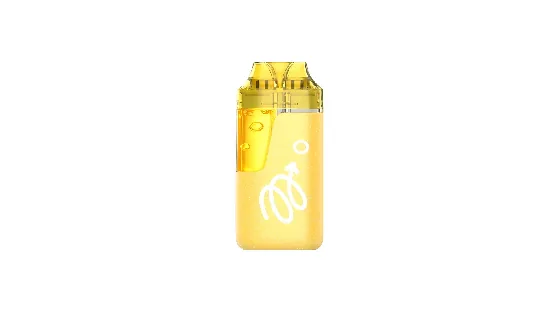
For manufacturers, stable output can help reduce noticeable changes in vapor production between the beginning and end of a device's usable life. We designed our Shiny all-in-one vaporizer with constant power output for consistent vapor from start to finish. Its specification lists 6W for distillates and 5W for live resin, making the intended operating profile clear.
Material and Component Selection
The materials contacting oil and aerosol deserve careful review. Scientific research has detected metals in cannabis vaping products and noted that hardware components can be potential sources of metal exposure under some conditions. This does not mean every device presents the same profile, but it reinforces the value of controlled material selection and testing.
A procurement team should examine the tank material, heating element construction, seals, electrical contacts, and airflow path instead of evaluating only the outer shell. Our Shiny uses food-grade PCTG and PC for the tank, with a P30 ceramic coil. Its 2.0ml tank, 240mAh battery, Type-C charging, and 13.2 × 27 × 67.5mm dimensions provide a defined configuration for brands evaluating a compact format.
Oil Visibility and User-Facing Design
For a commercial product, functional hardware characteristics also include how easily operators and end users can monitor the oil. A clear reservoir or oil window can help identify remaining material and make filling and inventory checks more straightforward. Hardware should combine this visibility with a structure that protects the reservoir and maintains reliable sealing.
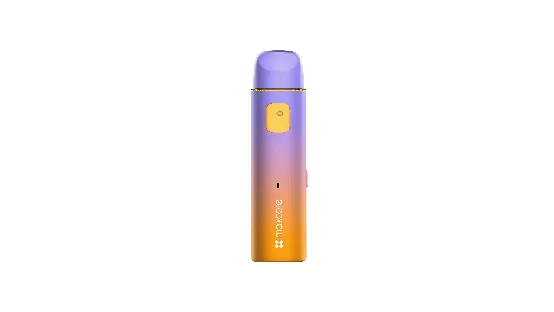
Shiny addresses this requirement with a clear window and a draw-activated light, providing illuminated oil visibility. We also designed its compact body with a premium exterior treatment, while keeping customization available for color, finish, and oil-window design. These details matter when cannabis hardware must meet both engineering requirements and a brand's visual identity.
Postless Architecture and Production Considerations
Internal architecture can affect more than appearance. Our POSTLESS® design removes the conventional center post and pairs the structure with our ceramic heating platform. This architecture is intended to support oil visibility and consistent delivery while giving product teams another route for compact all-in-one designs.
For B2B development, the larger question is whether the architecture can be reproduced consistently at production scale. That consistency is especially important when cannabis hardware is being qualified for multiple production batches. Buyers should ask suppliers about component tolerances, assembly controls, testing procedures, filling compatibility, and customization limits. A prototype may perform well, but repeatable manufacturing performance is what ultimately determines whether cannabis vape hardware is practical for a commercial product line.
Choosing Hardware Around the Formulation
The most important hardware characteristic is therefore not a single specification. THC distillate performance depends on the interaction between viscosity, oil-path geometry, ceramic heating behavior, power delivery, materials, airflow, and sealing. Procurement teams should validate the complete system with the actual formulation and operating conditions rather than relying only on a catalog description.
At Maxcore, we build our hardware around this systems approach. Shiny combines a POSTLESS® structure, P30 ceramic coil, 2.0ml tank, 240mAh battery, inhale activation, and constant output. For brands developing cannabis vape hardware for THC distillate, matching these characteristics to the formulation can provide a clearer path toward consistent production and a differentiated product experience.