What Should an Oil Compatibility Test Plan Include Before Hardware Approval?
Hardware approval should not begin with appearance, price, or a successful first puff. For cannabis brands, the more important question is whether a device can consistently handle the specific oil formulation throughout filling, storage, transportation, and use. A structured compatibility test plan connects formulation behavior with heating, oil delivery, airflow, materials, and operating conditions. This approach gives procurement and engineering teams measurable evidence before committing to production volumes.
Start With a Clear Oil Profile
Every compatibility program should begin by documenting the oil rather than testing hardware in isolation. The test file should identify the formulation, target fill volume, viscosity or flow behavior, additives, intended storage conditions, and expected usage profile.
This information matters because oils with different physical characteristics can behave differently inside the same device. A formulation that fills smoothly may not replenish the heating area at the same rate during repeated use. Recording the starting conditions also gives engineering teams a consistent reference when comparing hardware samples.
At Maxcore, we approach hardware development around oil behavior. Our R&D process considers composition, viscosity, flow characteristics, and atomization requirements before selecting an appropriate ceramic platform and heating-track design. This oil-driven approach helps connect formulation requirements with hardware development.
Define the Hardware Variables
The next section of a test plan should document exactly what is being evaluated. This includes tank capacity, oil-contact materials, ceramic core, airflow configuration, activation method, battery characteristics, output conditions, and filling procedure.
For teams evaluating cannabis vape hardware, controlling these variables prevents an apparently successful test from becoming difficult to reproduce. Two devices with similar external dimensions can behave differently because of changes in the heating element, oil pathway, airflow resistance, or sealing structure.
The plan should also define sample quantities and acceptance criteria before testing begins. A documented protocol makes it easier to compare suppliers and determine whether a failure comes from formulation behavior, manufacturing variation, or hardware design.
Test Filling and Sealing Performance
Filling deserves its own test stage because oil behavior during manufacturing can affect later performance. The protocol should record fill volume, filling speed, temperature, equipment, needle position, and any required settling time.
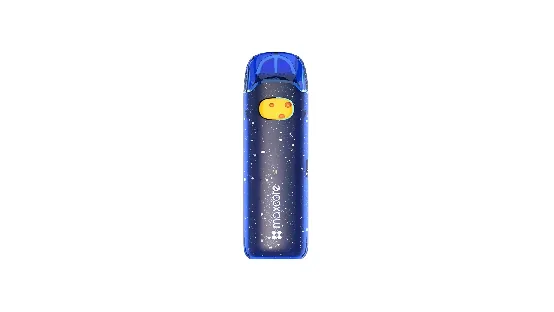
The Asto provides a practical example of why these details matter. Its published specification lists a 1.0ml tank, P20 ceramic core, 240mAh battery, 3.6V output, food-grade PCTG tank material, Type-C charging, and dimensions of 60 × 26 × 13.5 mm.
For Asto, Maxcore specifies slow filling while the tank remains upright and warns against allowing oil to enter the airways. The published instructions also call for fitting the mouthpiece cover promptly after filling. These details should be incorporated into manufacturing validation rather than treated as optional handling advice.
Measure Leakage and Oil Movement
Leakage testing should cover more than an immediate visual inspection. Samples should be examined after filling, after defined storage periods, and following transportation or temperature conditions relevant to the intended supply chain.
The test plan should record where leakage occurs and whether the issue appears consistently across samples. Inspecting the tank interface, seals, mouthpiece, airway, and heating region separately can help engineers identify the actual failure mechanism.
Oil movement should also be monitored during use. Changes in oil level, residual oil, airway contamination, and delivery toward the ceramic core can reveal problems that are not visible during a short bench test. These observations are especially useful when comparing formulations with different flow characteristics.
Evaluate Vaporization Under Repeatable Conditions
A hardware approval program should use controlled puffing conditions rather than relying on subjective demonstrations. Draw duration, interval, airflow, ambient temperature, and the number of consecutive puffs should be defined in advance.
Teams should monitor vapor consistency, activation reliability, visible leakage, clogging, taste changes, and device temperature throughout the test. Repeated measurements are more informative than a single successful session because some compatibility problems only appear as the oil level decreases or the heating cycle continues.
A postless vape can also introduce a different oil-path architecture that deserves specific evaluation. Asto uses Maxcore's POSTLESS® design, which removes the traditional central post from the oil-contact pathway, alongside a P20 ceramic core.
Include Material and Flavor Checks
Material compatibility should be evaluated alongside mechanical performance. The oil-contact pathway, tank, seals, heating structure, and other relevant components should be documented so that any unexpected flavor or material-related observation can be traced to a defined component.
For a postless vape, the oil-contact configuration is particularly relevant because the architecture changes how the formulation reaches the heating area. Testing should therefore compare flavor consistency and oil behavior across the complete device rather than judging the ceramic element separately.
This stage can include pre-use and post-use inspections, visual changes, residual oil assessment, and appropriate laboratory analysis when required by the product specification or applicable quality program.
Establish Pass/Fail Criteria Before Approval
A useful compatibility plan needs objective approval thresholds. These might cover leakage, clogging, activation, vapor consistency, remaining oil, dimensional integrity, charging behavior, or other product-specific requirements.
Each criterion should have a defined measurement method and acceptance range. The test record should also identify sample size, environmental conditions, equipment, operator, test sequence, and deviations from the protocol.
This structure follows a broader principle used in aerosol-device bench testing: protocols should clearly define objectives, device configurations, procedures, measurement methods, and test parameters before results are interpreted.
Move From Testing to Hardware Approval
A compatibility test plan should ultimately produce a documented decision, not just a collection of observations. Engineering and procurement teams can review formulation data, filling performance, leakage, oil delivery, vaporization, materials, and repeatability together before approving a device for production.
At Maxcore, we support this process by connecting oil analysis with ceramic atomization and hardware development. For brands considering cannabis vape hardware, Asto offers a compact platform with a 1.0ml capacity, P20 ceramic core, inhale activation, 240mAh battery, 3.6V output, and customizable oil-window options. Its postless architecture and one-step sealing design can then be evaluated against the specific formulation and manufacturing process.