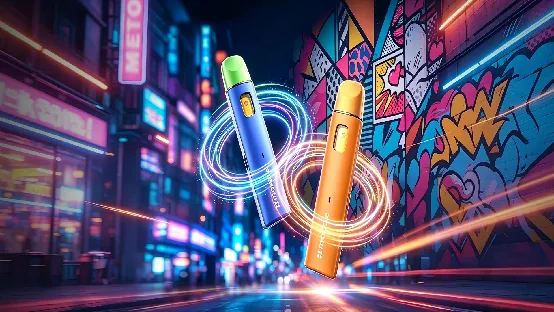
What Should You Look for in a Cannabis Vape Hardware Manufacturer for North American and European Markets?
Selecting a supplier for regulated cannabis markets requires more than comparing device designs and unit prices. Brands selling across North America and Europe must consider market-specific requirements, quality controls, documentation, customization, and supply consistency. A capable cannabis vape hardware manufacturer should therefore function as a technical and manufacturing partner, helping brands translate product requirements into repeatable hardware and compliant market-ready packaging.

Look for Market-Specific Regulatory Awareness
Regulatory requirements differ significantly between jurisdictions, so a supplier should understand that one global design cannot automatically satisfy every market. In Canada, for example, cannabis products are subject to detailed packaging and labeling requirements, while cannabis accessories can also be subject to consumer-product safety rules. Health Canada specifically identifies vaporizers as cannabis accessories when they are represented for cannabis consumption.
The European market requires similar caution, but the applicable framework depends on the product category and country. The EU Tobacco Products Directive regulates nicotine-containing electronic cigarettes, including requirements covering components, leakage protection, notifications, and packaging. Those rules should not simply be assumed to apply identically to cannabis products.
For North American and European projects, we recommend asking suppliers which documentation and specifications they can provide for the exact product configuration and destination market. Regulatory responsibility ultimately remains with the appropriate brand, manufacturer, importer, or license holder.
Evaluate Manufacturing and Quality Systems
A supplier's production capabilities deserve close attention because consistent hardware performance depends on controlled processes. Ask about incoming-material inspection, component traceability, assembly controls, testing procedures, defect management, and production records.
Certification can provide additional information about how a company manages quality. ISO 9001:2026, for example, establishes requirements for a quality management system covering areas such as documented information, operational controls, performance evaluation, and continual improvement. Certification itself is not a substitute for product-specific validation, but a documented quality system can support more consistent manufacturing.
When evaluating a cannabis vape manufacturer, brands should also request representative samples from production rather than judging the supplier solely from prototypes. Repeatability between development samples and mass-produced units is critical for long-term procurement.
Check Hardware and Oil Compatibility
A good supplier should be able to discuss hardware performance in relation to the intended oil rather than presenting every cartridge or vaporizer as universally compatible. Viscosity, formulation characteristics, fill volume, heating behavior, airflow, and oil-contact materials can influence leakage, clogging, vapor consistency, and flavor.
Testing should therefore happen with the actual formulation whenever possible. Ask whether the supplier can support sample testing, engineering adjustments, and iterative validation before production approval.
We work with brands on this type of development process by discussing hardware requirements alongside formulation characteristics. Rather than treating customization as purely cosmetic, we can adjust the design around the project's functional and branding requirements.
Prioritize Customization With Engineering Control
Customization is valuable for brands competing in crowded markets, but customization should not compromise manufacturing consistency. A supplier should be able to explain which design elements can be modified, how those changes affect tooling, and which materials or finishes are appropriate for production.
At Maxcore, we provide highly customizable design solutions intended to match a brand's visual direction. From unique shapes to custom colors and materials, we work with customers to translate brand concepts into manufacturable hardware with controlled specifications.
This distinction matters when comparing a cannabis vape hardware manufacturer with a simple trading supplier. A supplier that can connect industrial design, engineering review, prototyping, and production is better positioned to manage revisions without losing control of the manufacturing process.
Examine Packaging Capabilities Separately
Packaging should be evaluated as part of the market-entry plan rather than added after hardware development. Different jurisdictions can impose specific requirements concerning warnings, labeling, child resistance, information presentation, and branding.
Canada, for example, requires cannabis products to follow plain-packaging and labeling rules, including restrictions on logos, colors, branding, and youth appeal. Health Canada also specifies detailed requirements for information presentation and packaging construction.
We support packaging customization with professional solutions covering custom boxes, labels, and materials. Our goal is to help brands coordinate the presentation of the hardware and packaging while leaving market-specific regulatory content to the appropriate compliance review.
Ask About Documentation and Traceability
Documentation is another useful differentiator. A supplier should be able to provide clear specifications for materials, dimensions, components, production versions, and applicable testing. Change-control procedures are also important because seemingly small component substitutions can affect product performance.
For cross-border supply chains, traceability becomes even more valuable. Brands should know how production batches are identified and how quality issues can be investigated if a problem emerges after shipment.
Health Canada notes that cannabis packaging and labeling must support accurate product information, and its regulations include requirements that help identify lots for recall purposes. This illustrates why documentation should be considered part of supplier qualification rather than administrative paperwork.
Assess Communication Before Placing Large Orders
Communication quality often becomes visible during the development stage. A supplier should ask meaningful questions about oil characteristics, intended market, device requirements, packaging, production volumes, and testing expectations.
We believe this collaborative process is especially important for international projects. At Maxcore, we can work with brands on customized hardware concepts and packaging requirements while coordinating design details before production. Clear specifications help reduce misunderstandings between product development, procurement, manufacturing, and compliance teams.
A reliable cannabis vape manufacturer should also provide realistic development timelines, clearly distinguish prototype and mass-production stages, and communicate changes before they affect an approved specification.
Build a Supplier Evaluation Around the Whole Project
The right supplier evaluation should combine regulatory awareness, manufacturing controls, oil compatibility, customization, packaging, documentation, and communication. No single certificate, product catalog, or low quotation can answer all of these questions.
For brands entering North American and European markets, we position Maxcore as a partner for customized hardware and packaging development. Our approach combines tailored device design with packaging customization, allowing customers to develop a more coordinated product concept while validating the specific technical and regulatory requirements of each destination market.